Could we teach our children anger management skills with anger games?
Anger games are a great way to turn a really serious topic into an enjoyable activity.
I´ve written about anger in several of my posts. I´ve shared with you a comprehensive review of the best tips for anger management with kids, a selection of anger management activities for kids, and printables to help recognize the signs of anger.
But, is there a better way to build coping skills and emotional self-regulation than through play?
Let’s take a look at some fun anger management games for kids that we could include in our coping skills toolbox.

In this post we´ll read:
- Why play is important when learning a new skill
- Anger Management Games: 17 super fun ways to learn anger management skills
- My 4 “Top Picks”
- Other anger games for kids
- Anger management games for teens
- Turning classic games into anger resources
- Books about Anger Games
- Other Anger Management Resources for Parents
(Disclosure: We are a participant in the Amazon Services LLC Associates Program, an affiliate advertising program designed to provide a means for us to earn fees by linking to Amazon.com and affiliated sites. As an Amazon Associate, I earn from qualifying purchases. You can also read our Disclosure & Disclaimer policy here)
Why is play important when learning a new skill?
There is a substantial body of research that argues for the importance of play in human development, supporting its role in children’s physical, cognitive, emotional, and social learning:
- Physical play provides children with the health benefits of exercise, cognitive self-regulation, or social competence – this would include activities like:
- activity play (jumping, climbing)
- fine-motor practice( coloring, manipulating construction toys)
- ‘rough-and-tumble’ (play-fighting)
- Playing with objects allows kids to explore the world, develop fine motor skills, representational abilities, reasoning, and problem-solving strategies.
- Symbolic play (the ability of children to use objects, actions, or ideas to represent other objects, actions, or ideas as play) prepares them for social activities and helps them make sense of the world surrounding them.
- Games with rules (starting around the age of 6 or 7) are very important for their social development as they require: cooperation, following rules, competing, thinking about the other’s point of view and anticipating other people´s actions.
So, if kids learn through play, why not resort to this learning method in order to ensure their best engagement when we are teaching them anger management skills?
Anger Games: A Super Fun Way to Learn Anger Management Skills
Today, I´m presenting you with a selection of anger management games. Anger games can work really great when practicing/learning coping skills at home, at school, or in the counseling environment.
These fun anger management activities are a great way to gain engagement even from kids who would otherwise have been reluctant to work on their anger issues.
Super Fun Anger Management Games. My 4 “Top Picks”:
1. Mad Dragon (ages 6-12)
Mad Dragon plays like the popular game UNO. Players race to get rid of their cards while learning anger control skills. This therapeutic card game helps kids:
- Control their anger in the moment;
- Practice 12 anger management techniques
- Understand what anger feels and looks like;
- Avoid anger-provoking situations;
- Express and understand their feelings;
- Identify anger cues;
- Learn that they have choices about how to express anger.

Why I like it:
- It is great for all kids. Therapists use them also with kids with autism, learning disabilities and emotional problems.
- It covers a wide range of activities: understanding triggers, expressing feelings or practicing anger management exercises
- it builds on a tried and tested game (UNO)
Tip:
- if you are playing with kids with learning disabilities you will need to read the cards for them. You may also need to rephrase a sentence, sometimes, to make it easier to understand.
Check Out Mad Dragon on Amazon
2. Temper Tamers in a Jar (ages 8-11)
Temper Tamers in a Jar is a great way to engage children in a discussion about anger and help them adopt new ways to deal with their angry thoughts and feelings. There are four different type of cards: Share (the child shares a real-life experience), Act (the child can role play a positive way to manage a situation ), Tips, and Do (what would the child do in a specific scenario).
Why I like it:
- It gets kids to talk about their own experiences and to think about what should be done in a specific situation
- I really like the role-playing part. I feel kids learn a lot when they role-play situations.
Tip:
- you can use them with kids of different ages, but some people find it useful to make a selection to fit the age group they want to work with.
A weakness:
- you may be a bit disappointed when you see the cards. They are thin cards / pieces of paper. (they still do the job, though)
3. Thoughts and Feelings
Thoughts and Feelings 2: is a therapeutic tool designed to help parents, teachers, and mental health professionals engage children of all ages. The deck contains 35 cards especially effective in helping children identify, process, and work through a variety of issues including changes within the family, trauma, grief, anger, depression, anxiety and fears.
Why I like it:
- they are a great tool to get kids to open up and express their feelings.
- I really love the illustrations
Tip:
- they are great conversation starters, but sometimes younger kids may get a bit confused when the picture does not relate to the sentence. They still work wonders, though.
4. Anger Management Thumball
Anger Management Thumball is a soft stuffed ball to throw, roll, or pass in a circle or randomly. When you get the ball you have to look under your thumb and respond to a prompt. It encourages the use of interpersonal skills including taking turns, eye contact, listening, responding and respecting individual differences.
Why I like it:
- I just love this anger game concept. It is so fun to throw a ball around and take advantage of that enjoyable situation to start a conversation about anger
Tip:
- Don´t expect a big ball
Other Anger Management Games for Kids
5. The Talking, Feeling, & Doing Anger Card Game (ages 6-12)
The Talking, Feeling, & Doing Anger Card Game is a game intended to help children explore their feelings and develop new ways to think about themselves and their problems.
6. Stop, Relax & Think (age 6-12)
Stop, Relax & Think: is a game to help impulsive children think before they act by learning motor control, relaxation skills, how to express their feelings, and how to problem-solve. This one is designed for counselors, social workers and therapists.
Anger Management Games for Teens
The following games are great anger management activities for teens:
7. The Anger Defuser (ages 8-18)
The Anger Defuser helps better understand about anger and how destructive it can be through conversation and play.
8. Anger Management Party Game (teenagers)
Anger Management Party Game is a fun family game. You start off at “Mildly Irritated” and if you’re the first player to get “Absolutely Steamed” you win the game. As any anger game is a good tool to facilitate discussion about anger triggers and coping skills.
9. Anger Bingo for Teens (ages 12-18)
Anger Bingo for Teens addresses five anger management areas: triggers, symptoms, causes, control, and prevention. Includes laminated cards, chips, calling cards, reproducible handouts, and instructions.
Turning Classic Games into Anger Resources
Classic games can be ingeniously adapted for anger management purposes, offering a creative approach to emotional regulation.
Additionally, these games hold another significant advantage: they can be effectively utilized as group activities for anger management.
10. Anger Freeze Dance
This game puts a twist on the classic freeze dance. Children dance to the music, and when the music stops, everyone freezes. The person who doesn’t freeze must name an emotion they are feeling or have recently felt, with an emphasis on understanding and coping with anger.
11. Angry Simon Says
Adapt the classic “Simon Says” game to include actions that are beneficial for anger management. For instance, “Simon says, take three deep breaths,” or “Simon says, count backwards from 10.” This helps kids practice anger-calming techniques in a fun and interactive way.
12. Angry Red Light, Green Light
In this modified version of “Red Light, Green Light,” when the leader says “Green Light,” children move forward while expressing a happy or calm emotion. When the leader says “Red Light,” they must freeze and express something that makes them angry, followed by a quick calming technique they could use.
13. Anger Management Musical Chairs with a Twist
In this variation of Musical Chairs, when the music stops, everyone scrambles to find a seat. The person left standing, instead of being ‘out,’ shares their current feelings. If they’re not experiencing anger, they can mention something that has frustrated them recently. After expressing their feelings, they also share a calming technique or strategy they use to manage these emotions. This adds a reflective and educational aspect to the classic game, encouraging emotional expression and the sharing of coping mechanisms.
14. Anger Management Bingo
Create Bingo cards with different anger management strategies or triggers in each square (like “take a deep breath,” “count to ten,” “walk away,” etc.). As you call out different scenarios or strategies, players mark their cards. This game not only entertains but also educates children about various ways to handle anger.
15. Anger Jenga
Transform the classic game of Jenga into a tool for discussing emotions. On each block, write a question or prompt related to anger management, such as “Name a time you felt really angry” or “What is a healthy way to express anger?” When a player pulls a block, they answer the question before placing the block on top.
16. Soothing Angry Animal Walks
In this game, kids select an animal and express their anger by walking, stomping, or moving like it. Once everyone has had a chance to demonstrate their ‘angry animal,’ a child is picked at random. This chosen participant then explains how they would soothe their angry animal, discussing calming techniques or strategies they could use to settle the animal’s anger. This activity not only aids in releasing pent-up energy but also encourages children to think about and articulate methods for calming anger.
17. Volcano Eruption
A role-playing game where children act out a volcano that’s about to erupt (symbolizing building anger). They then demonstrate how the volcano can cool down, mimicking calming techniques for anger.
If you wish to explore more ideas on how to turn classic games into anger management resources, check out the suggestion in the next section.
Books About Anger Games
There are also some really good books that can guide you on how to use games to help kids or teens manage their anger issues.
18. Anger Management Games for Children
Anger Management Games for Children can be a good tool for parents and teachers. It includes introductory material (“Theoretical and practical background”) with very useful information about:
- the effects of anger
- anger triggers
- biological effects of anger in the brain
- how anger manifests itself in children
- anger management techniques
The second part contains a collection of social interaction games and memory games
19. Therapy Games: Creative Ways to Turn Popular Games Into Activities That Build Self-Esteem, Teamwork, Communication Skills, Anger Management, Self-Discovery, and Coping Skills
Therapy Games shows 102 ways to turn ordinary games (like Taboo, Monopoly or Scrabble) into Therapy Games. Each game discussed in the book comes with five or more ways to make simple changes that create therapeutic experiences.
20. 104 Activities That Build: Self-Esteem, Teamwork, Communication, Anger Management, Self-Discovery, Coping Skills
Alanna Jones (author of Therapy Games) has also produced another great book: “104 Activities That Build: Self-Esteem, Teamwork, Communication, Anger Management, Self-Discovery, Coping Skills“. The topic is broader than just anger management, but I think is a really good book worth mentioning if you are seeking to develop coping skills. It is a good book for teachers, therapist or counselors.
21. Therapy Games for Teens: 150 Activities to Improve Self-Esteem, Communication, and Coping Skills
This is another great book to help teens deal with frustration and big emotions.
Are you ready to start playing an anger game?
Still looking for fun ways to develop coping skills? If anxiety in kids is a problem you have to deal with at home or school, you may find this article interesting: Anxiety Games, Toys and Books: 12 Super Fun Ways to Help an Anxious Kid
Other Anger Management Resources for Parents
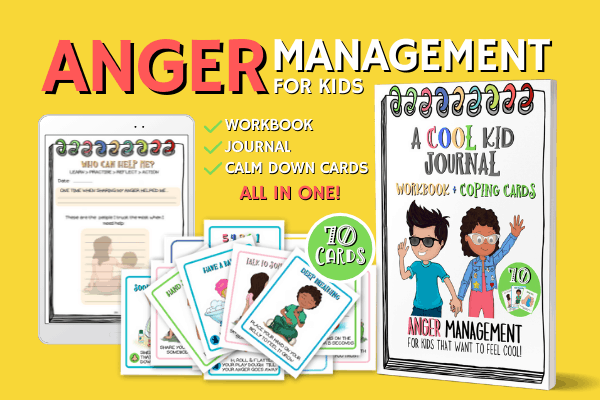
- Anger Management for Kids– 36 Awesome Tips to help you with your anger management interventions at home
- Anger Management Activities for Kids – Includes a free set of calming down cards (30)
- Anger Toolkit for Teens (workbook + cards)
- Anger Activities for Teens
- Anger Triggers– Includes a free printable
- Signs of Anger Worksheets for Kids
If you found this post useful, share us on Pinterest ♥
Anger Games: 21 Super Fun Ways to Learn Anger Management Skills


I never thought about playing games as a way to teach my children ways to deal with anger. If you could only recommend one of the above sources, which do you think would be the most fun/effective for children ages 6-10 who do not have high reading levels? My kids have anxiety and ADHD/sensory processing disorder and sometimes react to their frustrations with anger… Thanks!
Great Idea!
I am Certainly going to buy one of these game because my son also gets angry very easily.
Would love some resources for preschool aged children.
Thanks!