Perspective-taking activities for kids: Explore 20+ perspective-taking games and activities and teach your kids or students this important social skill while having fun! Understand perspective taking and its role in fostering empathy, improving communication, and enhancing social interactions.
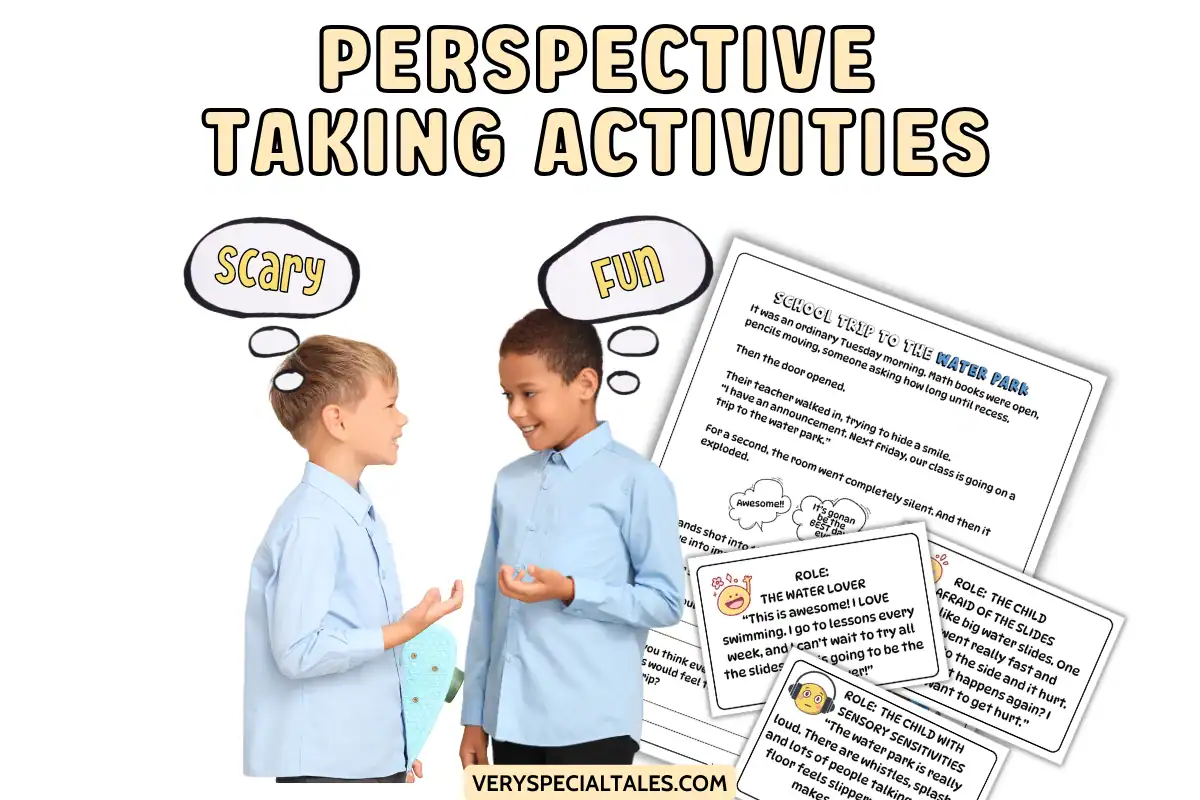
💡 Be sure to download the free printable role-play scenario included at the end to explore “same event, different perspectives” in action.
Table of Contents
- What is Perspective Taking?
- Theory of Mind
- Difference Between Perspective Taking and Theory of Mind
- 22 Perspective-Taking Activities for Kids
- Free Perspective-Taking Activity for the Classroom (PDF Download)
What is Perspective Taking?
Perspective-taking refers to the ability to see things from another person’s point of view. This important skill is critical for understanding the thoughts, feelings, motivations, and intentions of others. It involves more than just understanding the perspective of others; it’s also about being able to consider that viewpoint when making decisions, solving problems, and interacting in social situations.
Types of Perspective-Taking
At its core, perspective-taking is the ability to step outside of our own experiences and consider the world from someone else’s viewpoint. And we could look at perspective-taking from different angles, each offering its unique insight.
- Cognitive perspective taking (Cognitive empathy)
Intellectually understanding another person’s thought process and reasoning. - Affective perspective taking (Emotional empathy)
Emotionally understand what another person is experiencing. It goes beyond simply recognizing emotions to actually experiencing a form of that emotion oneself. - Physical perspective taking
Often relevant for younger children, this is about understanding that what one sees, hears, or experiences physically can be different from what another person perceives. A clear example of this is visual perspective taking and how different an object may look from different angles. - Contextual perspective taking
Recognizing how someone’s background (cultural, social) or circumstances can influence their viewpoint.
Importance of Perspective-Taking
Perspective-taking is important for a variety of reasons:
- Social understanding
It helps us understand social cues, norms, and behaviors, which lead to more successful social interactions. - Conflict resolution
Understanding another person’s perspective can be key to resolving disagreements and conflicts. - Empathy and compassion
The ability to see things from someone else’s point of view helps us empathize with them, which can lead to more compassionate actions. - Communication skills
Effective communication often involves considering how the other person might interpret or react to what you’re saying or doing. - Decision making
Perspective-taking can be important in ethical decision-making, as it allows us to consider the effects of our actions on others. - Emotional intelligence
This is a component of emotional intelligence, a set of skills that help us recognize, understand, and manage our own emotions, as well as recognize, understand, and influence the emotions of others.
Research suggests that perspective-taking can be trained, improving perspective-taking skills and implementation of prosocial behaviors of help, comfort, and sharing, both in both children with autism spectrum disorder and typically developing children.
How Can We Teach Perspective-Taking?
There are various ways to teach or encourage perspective-taking:
- Modeling
One of the most effective ways to teach perspective-taking is by modeling the behavior. Children learn a great deal from watching adults and peers practice this skill. - Discussion
Open dialogue about feelings, thoughts, and motivations in different situations can encourage children to think from different perspectives. - Role-playing
This method allows children to “walk in someone else’s shoes,” thereby understanding how different situations affect different people. - Storytelling
Stories, whether in books, plays, or movies, often provide opportunities to understand the thoughts and feelings of different characters. - Mindfulness and reflection
Activities that promote mindfulness can also help in enhancing this skill, as mindfulness encourages awareness and consideration of one’s own and others’ thoughts and feelings. - Natural environment
Teaching perspective-taking in a child’s natural environment is important because it helps them apply this skill in real-world situations, where they interact with others and see things from different viewpoints every day.
In summary, perspective-taking is a vital life skill that contributes to emotional intelligence, social cohesion, and personal development.
Specifically, in special education, teaching perspective-taking is crucial as it supports students with diverse needs in understanding social cues and building meaningful relationships with their peers.
A closely related concept to perspective-taking is Theory of Mind. We will explore this concept in the next section.
What is Theory of Mind?
Theory of Mind (ToM) refers to the ability to attribute mental states such as beliefs, desires, intentions, and emotions to oneself and to others, and to understand that others have mental states that can be different from one’s own. This cognitive skill is crucial for understanding and interpreting social interactions, allowing individuals to predict or explain other people’s actions and reactions.
Theory of Mind is considered a cornerstone of social cognition and is critical for a range of human interactions, including:
- Communication: Understanding that others may have different information or viewpoints helps us tailor our messages and interpret the messages of others more effectively.
- Empathy: ToM allows us to understand other people’s feelings and emotional states, contributing to prosocial behaviors and our ability to empathize.
- Cooperation: Understanding other people’s goals, intentions, and beliefs helps facilitate cooperation in social and work environments.
- Conflict resolution: Theory of Mind aids in understanding the motivations and feelings behind actions, providing a foundation for conflict resolution strategies.
- Moral understanding: Recognizing that others have feelings and perspectives helps children develop a sense of fairness and morality.
Factors Affecting Theory of Mind
- Cognitive Abilities: General cognitive skills like memory, attention, and problem-solving contribute to ToM development.
- Social Exposure: Interaction with peers and adults can facilitate ToM skills. Children who have more opportunities to engage in complex social interactions often have a more advanced Theory of Mind.
- Language Skills: Language provides the tools for discussing and understanding mental states, and there is evidence that language development and ToM are closely linked.
- Cultural Factors: Different cultures emphasize different social skills and norms, which can influence the development of Theory of Mind.
- Neurodevelopmental Factors: Individuals with autism spectrum disorder (ASD) may experience a different developmental pathway in acquiring Theory of Mind skills.
The “False-Belief” Task
The false belief task is a classic experiment used in developmental psychology to assess a child’s theory of mind capabilities, specifically the understanding that other people can hold beliefs that are different from their own and that may be incorrect. This task is often used to gauge whether a child has reached a particular developmental milestone related to social cognition. This task also shows us how younger kids understand the world around them.
The Sally-Anne Test
One of the most well-known versions of the false-belief task is the “Sally-Anne Test,” named after its two puppet characters, Sally and Anne. Here’s how it typically works:
- Setup: The child watches a short puppet show or animated story. In the story, Sally has a basket, and Anne has a box. Sally places a marble in her basket and then leaves the scene.
- Action: While Sally is gone, Anne takes the marble from Sally’s basket and puts it into her box.
- Question: Sally returns, and the child is asked where Sally will look for her marble.
Interpretation
- If the child says that Sally will look in her basket, it indicates that the child understands that Sally holds a “false belief.” Sally doesn’t know that the marble has been moved, so she will look where she last put it. This response is usually expected from children around four years of age and older.
- If the child says that Sally will look in Anne’s box, it suggests that the child does not yet fully grasp that other people can have beliefs that are different from their own and can be incorrect. This is the response often seen in younger children.
Is Perspective-Taking the Same as the Theory of Mind?
While both perspective-taking and theory of mind (ToM) are related to understanding others and social cognition, they are not exactly the same thing.
Perspective-taking is the act of viewing a situation or understanding a concept from an alternative point of view. While ToM refers to the cognitive ability to attribute mental states like beliefs, intentions, desires, and emotions to oneself and others. It’s understanding that others have thoughts and feelings that may differ from one’s own. Perspective-taking is often described as more behavioral, and ToM is more cognitive.
But, although they are not the same they do overlap in some areas:
- Both are subsets of social cognition, the study of how people process and apply information about others in social situations.
- Both are crucial for developing empathy, the ability to understand and share the feelings of another.
- Both skills are important for effective interpersonal relationships and social functioning.
Theory of Mind is a broader cognitive ability that allows for the understanding of other mental states, while perspective-taking is more of an applied skill that involves seeing things from the perspectives of others.
(Disclosure: We are a participant in the Amazon Services LLC Associates Program, an affiliate advertising program designed to provide a means for us to earn fees by linking to Amazon.com and affiliated sites. You can also read our Disclosure & Disclaimer policy here)

22 Perspective-Taking Activities for Kids
Perspective-taking activities can help children develop empathy, social skills, and a better understanding of the point of view of others. These activities often encourage critical thinking and can be fun and engaging for children.
Let’s explore some fun and interactive activities that can hone your students’ perspective-taking skills:
Story Time with Multiple Perspectives
Read a story: Read a short story or fable to the children.
Discuss: After reading, discuss the story and the character’s motivations and feelings.
Switch it up: Ask children how the story might be different from another character’s perspective. Have them retell the story from that viewpoint.
“A Day in My Shoes”
Pair up: Pair the children together and ask them to spend a day or an hour observing their partner.
Share: After the observation period, they can share what they think a day in their partner’s life might be like.
Discuss: Talk about the experience and what they learned about their partner’s daily life.
Perspective Charades
Write down situations: Write down various scenarios on cards (e.g., “Being the last one picked for a team,” “Winning a prize,” “Not knowing anyone at a party”).
Act and guess: One child acts out the scenario, and the others try to guess what situation they’re in.
Discuss: Talk about how our body language gives us information about other people’s feelings. Discuss how someone might feel in that situation and why.
The “What Would You Do?” Game
Create cards: Make cards with different social situations (e.g., “You find $20 on the floor,” “A friend tells you a secret”).
Draw and discuss: Kids draw a card and discuss what they would do in that social situation and why.
Different perspectives: Ask how others might handle the same situation differently and discuss the reasons behind the different choices.
Perspective-Taking Role-Playing
Create Scenarios: Create role-play scenarios where someone might feel left out, happy, sad, etcetera.
Assign Roles: Assign children roles to act out these situations.
Swap Roles: Have them swap roles to see the situation from different perspectives.
You can also use the free printable role-play scenario “Same Event, Different Perspectives” included at the end of this article.
Two Sides to Every Story
Scenario: Present a scenario where two parties have a disagreement (e.g., two kids fighting over a toy).
Divide: Divide the children into two groups and assign each group to one of the parties in the disagreement.
Debate: Have each group present their side of the story and then discuss how to find a compromise to that social problem.
Cultural Awareness
Show pictures: Show children pictures or videos about different cultures or lifestyles.
Discuss: Talk about how life might be different for people in those cultures.
Compare and contrast: Discuss how their own lives are similar or different and why understanding these differences is important.
Empathy in Action
Community service: Engage children in simple community service activities.
Reflect: After the activity, discuss how their actions might have impacted others.
Understanding Emotions
Emotion cards: Create cards with different facial expressions depicting various emotions.
Guess the emotion: Show the cards to the children and ask them to guess the emotion.
Discuss: Discuss what kinds of situations might make someone feel that way.
Picture Interpretation
How to play: Show children a picture or a painting that has multiple elements and characters.
Goal: Discuss what each character in the picture might be feeling or thinking. This helps children think about multiple perspectives simultaneously.
Visual Perspective-Taking
Goal: To help children understand that the same object can look different depending on the viewer’s perspective.
How it works:
- Choose an object: Select a common object and place it in the center of the room. When choosing an object for the perspective-taking activity, ensure it looks distinct from various angles, such as a sculpture or a clock tower that displays the clock only on one side. Alternatively, you can create an obstacle that partially obscures the object from some children, further emphasizing how different perspectives can lead to different perceptions.
- Drawing time: Have each child sit in different spots around the object, ensuring that each child has a unique view. Ask the children to draw the object as they see it from their specific location.
- Share and discuss: Once everyone is done drawing, have the children share their drawings with the group. Discuss how the object looks different in each drawing and why that is (i.e., because everyone was looking at it from a different angle).
Mystery Feelings
How to play: Put different emotion words in a box. Kids take turns drawing a word and acting it out without speaking.
Goal: The others guess the emotion and discuss a situation where someone might feel that way.
Perspective Scavenger Hunt
How to play: Create a list of items for kids to find around the house or classroom, each relating to a different perspective (e.g., glasses for seeing, a spoon for tasting).
Goal: Discuss how each item could be perceived differently by different people (e.g., glasses can be stylish, practical, or unnecessary, depending on who you ask).
Time Travelers
How to play: Discuss different time periods or important historical events.
Goal: Have kids explain how they would feel if they lived during that time, promoting the understanding that societal perspectives change over time.
Animal Kingdom
How to play: Discuss different animals and their habitats.
Goal: Have kids describe a day in the life of an animal of their choice, encouraging them to consider non-human perspectives.
Future Me
How to play: Ask the children to write a letter to their future selves.
Goal: Discuss how their goals, dreams, or perspectives might change as they grow older.
Family Roles
How to play: Assign each child a different family role (e.g., mother, father, sibling, pet).
Goal: Have them act out a typical family dinner, each from their assigned perspective. Discuss the different responsibilities and feelings each family member might have.
News Reporter
How to play: Discuss a neutral or positive current event (keep it age-appropriate).
Goal: Have kids pretend to be news reporters explaining the event from the perspective of different stakeholders involved.
Perspective-Taking Social Story
Social stories or social narratives are short descriptions of a situation and the expected social behavior. They assist kids who struggle with reading social cues (body language, voice tone, facial expression) or with understanding social rules.
Perspective-taking situations can also be transformed into a social narrative.
These stories should apply to specific perspective-taking situations that you wish to teach.
For example, if you are working on understanding what to do when a student sees a sad peer, you could create a story about the situation.
Perspective-Taking Social Story Example:
Sometimes my friends feel sad. I can see this when their smiles go away, and they look down. When this happens, I will remember that my friends have feelings just like I do.
If I see my friend crying, I will think about how I feel when I cry. This helps me understand my friend better. I can say, “It’s okay to feel sad. Do you want to talk about it, or would you like a hug?”
If my friend is sad because they lost a toy, I will remember how I felt when I couldn’t find my favorite book. I can say, “I’m sorry you lost your toy. That happened to me once, and I felt upset, too.”
When I understand why my friend is sad, I can be a good friend. I can listen, share my feelings, and maybe help them feel a little better.
Watch a Movie about Perspective-Taking
Watching a movie about perspective-taking, like one where characters swap bodies, can be a fun and engaging way for kids to learn about seeing things from another’s point of view. For example, in a film where a child and a parent magically exchange places, kids can observe and discuss how each character navigates the world differently in the other’s shoes.”
Empathy Maps
An empathy map is a simple visual tool that helps kids explore what someone else might be thinking, feeling, saying, and doing in a specific situation. You can use it with real-life moments, story characters, or common playground scenarios. As children fill in each part of the map, they practise slowing down, considering another person’s point of view, and understanding their feelings, thoughts, and actions.
Empathy Worksheets
A fun, printable empathy workbook with engaging worksheets and activities that help kids understand feelings, see things from others’ perspectives, and turn empathy into action.

Perspective-Taking Picture Books
Reading children’s books is a wonderful way to introduce young minds to the concept of perspective-taking, as stories often present characters and situations that encourage kids to think about and understand different viewpoints and experiences. These are a couple of examples:
- Perspective Detective
Perspective Detective is a rhyming book featuring a Bear Detective shows kids how to look at things from a different point of views and in different ways.
- Stand in My Shoes: Kids Learning about Empathy
A book that teaches about empathy and the value of noticing how other people feel.
As we’ve explored, engaging in perspective-taking activities is a great way to develop complex social skills across a range of age groups—from younger students to young adults. Whether through a fun game designed for a small group or more structured exercises within a school setting, these activities will help kids see and value the many different interests that bring our social world together. By stepping out of our own perspective and tuning into people’s interests and viewpoints, we enrich our social experiences and cultivate a more empathetic and understanding community.
Other Social-Emotional Learning Resources
- Social Skills Activities for Kids
- 50 Communication Games & Activities for Kids
- Public Speaking Activities for Kids And Teens
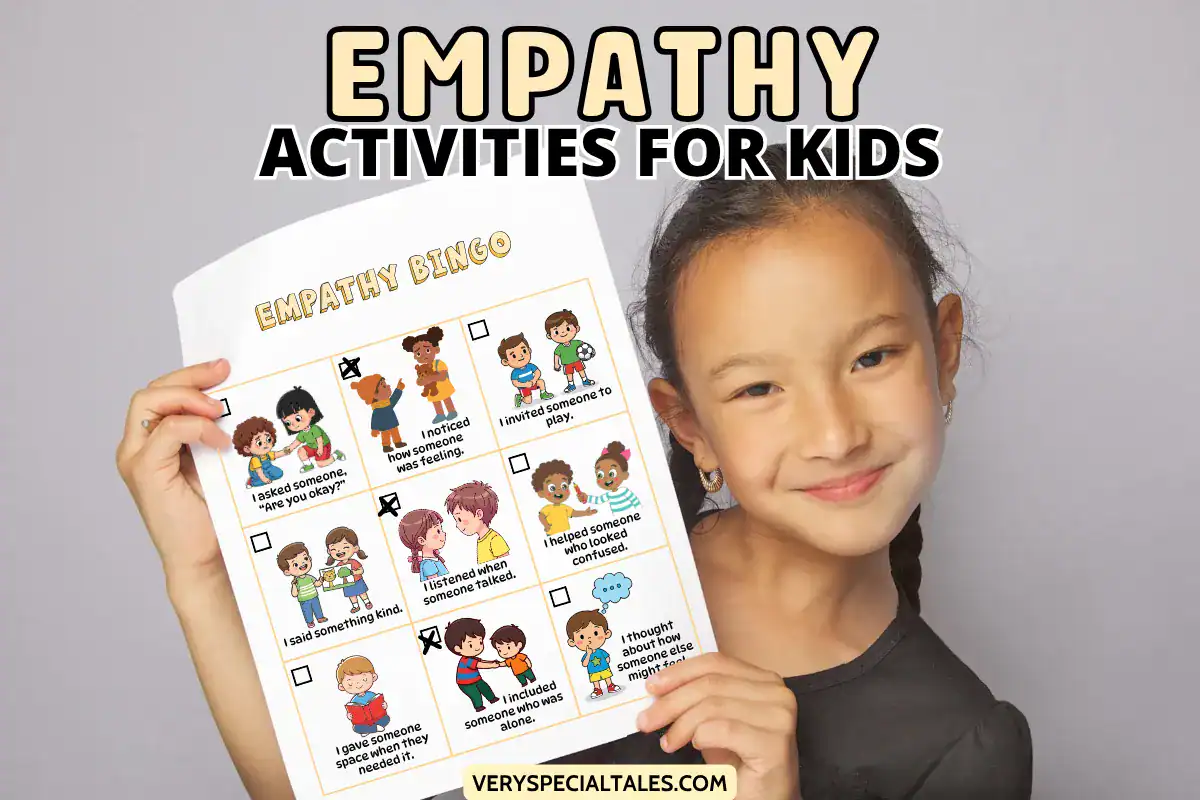
- Empathy Activities for Kids
- Emotional Intelligence Activities for Kids
- 101 Kindness Activities for Kids
- Gratitude Activities for Kids
Perspective Taking Activity (Free Download)
Perspective Taking Activity: Same Event, Different Perspectives
In this free activity, students explore how a crowd-pleasing plan can look very different from different points of view. Perfect for building empathy and flexible thinking.
Your download includes:
- Teacher instructions
- Scenario description
- 8 Perspective-taking role-play cards

I’m truly grateful for the resources you share to us. They are not only helpful but also friendly and visually appealing.
We deeply appreciate this excellent info and guidance! What a valuable,; well-loved, website! Thanks so much for your time and effort in helping others! 🙂🤗