
Empathy Maps for Kids (Printable + Example): Empathy is a powerful skill that helps children understand how others feel, respond with kindness, and build healthier relationships. One tool that makes this skill easier to practise is an empathy map.
Originally developed in the design thinking world to understand people’s experiences, empathy maps make an excellent tool for supporting social-emotional learning in kids. They help children organise their ideas about someone else’s experience in a clear, visual way.
In this post, we’ll explore what empathy is, how an empathy map works, and how you can use this tool to support emotional awareness and perspective-taking. You’ll also find a free printable empathy map worksheet designed especially for kids.
Recommended resource: If you’d like to explore empathy in more depth, the Empathy Workbook for Kids teaches empathy in a clear, practical way. With simple explanations, engaging activities, and plenty of practice, kids learn how to notice feelings, understand different perspectives, and respond with care.
What Is Empathy?
Empathy is the ability to understand how someone else might be feeling inside and why.
When children develop empathy, they can:
• Notice clues about how others feel
• Understand what might be causing those feelings
• Respond kindly and helpfully
Empathy is a skill. With a bit of practice, kids can learn it, strengthen it, and use it in everyday situations.
Related Reading: 23 Fun Empathy Activities for Kids
What Is an Empathy Map?
An empathy map is a visual tool used to explore another person’s perspective. It organises what someone might think, feel, say, and do, helping us better understand their experience.
You may have seen adult empathy maps with six sections, including aspects such as pains and gains. Those versions were created for design thinking and business settings, and they can be too abstract or complex for children.
For ages 5 to 11, a simpler, four-part map works much better. It focuses on what matters most for building empathy: what someone might think, feel, say, and do.
Empathy Map for Kids
An empathy map is a visual tool that helps kids step into someone else’s shoes by noticing both the inside (thoughts and feelings) and the outside (words and actions) of someone’s experience.
The questions we will explore in our empathy map for kids are:
- What might they be thinking?
- What might they be feeling?
- What might they be doing?
- What might they be saying?
By filling in each part, children practise slowing down, observing, and imagining the inner world of another person. This makes the big idea of empathy more concrete and easier to grasp.
Empathy maps can help children:
- Build emotional vocabulary
- Strengthen observation and listening skills
- Consider different viewpoints
- Understand peers better during conflict
- Make invisible feelings more visible and clear

How to Use the Empathy Map Worksheet (Step-by-Step)
We’ve created a kid-friendly empathy map worksheet that you can print and use during this activity. Let’s explore a few tips to help you guide children through each part of the map.
1. Choose a scenario
Pick a real situation, a moment from a story, or a character children already know.
Example: A student feeling left out at recess.
2. Ask guiding questions
Help kids think more deeply by asking:
- “What might this person be feeling right now?”
- “What could they be thinking?”
- “What might their body be showing us?”
3. Fill in the map
Kids write or draw their ideas in each section. Younger children may prefer pictures, colours, or simple words.
4. Reflect together
When the map is complete, talk about what they noticed.
Ask:
- “What surprised you?”
- “Did you understand this person better after mapping their feelings?”
5. Connect it to real life
Encourage kids to think of ways this understanding could help them make kinder choices in similar situations.
Other Empathy Resources
- Empathy Workbook for Kids
A fun, printable empathy workbook with engaging worksheets and activities that help kids understand feelings, see things from others’ perspectives, and turn empathy into action.

- How to Teach Empathy to Kids: 23 Fun Empathy Activities for Kids
- 101 Kindness Activities for Kids
- Conflict-Resolution Activities for Kids
Free Empathy Map Worksheet for Kids
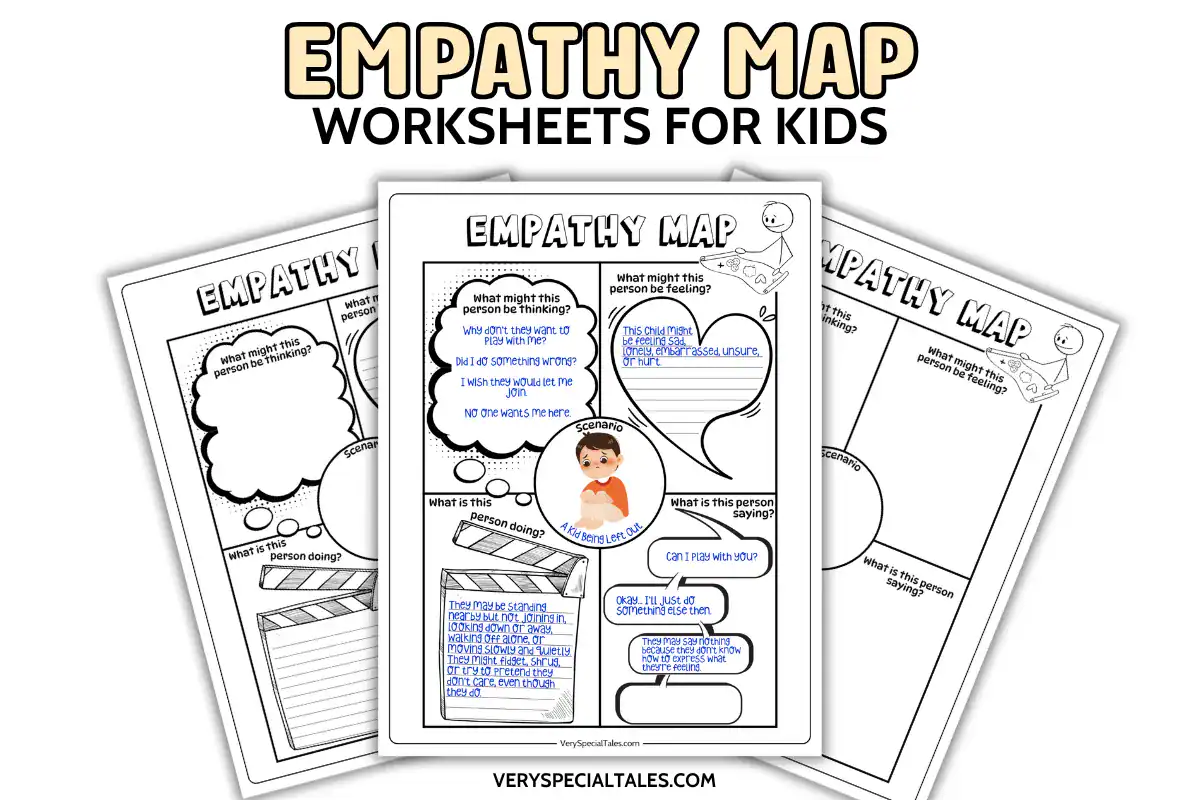
Download your kid-friendly empathy map worksheet pack. It includes three helpful tools:
- A fun, illustrated empathy map (four key sections in a clear visual layout, so children can map out someone else’s thoughts, feelings, words, and actions step by step).
- A simple, plain version with plenty of space to write
- A completed example to guide children as they try the activity on their own
Use it during morning meetings, social-emotional learning activities, or as a tool to help children understand peers during conflict.


love the free worksheets for my K-6th graders.