Finger Tracing Cards and Activities for Kids: Discover how finger tracing helps children manage big emotions like anxiety and anger, and grab a free printable set with breathing prompts, finger tracing cards, and bilateral finger tracing posters (double doodle brain games).
I discovered the magic of finger tracing as a calming tool many years back, and completely by accident. I wasn’t even looking for that kind of activity. I was just trying to practice breathing exercises with my own child.
And I had failed. Every time I tried to teach him, he’d get impatient halfway through. He’d start breathing faster and faster, then proudly say, “Look! I’m breathing!”. As if speeding through it proved he was doing it right.
Then we came across lazy eight breathing, and it worked like magic.
What made the difference?
One of the things that clearly contributed to the shift was the finger tracing. As we followed the shape with our fingers while breathing in and out, the activity turned into a true mindfulness moment. We were fully present, focused on the movement, breathing in sync with the tracing, and engaging both brain and body. That small shift made a noticeable impact.
Finger tracing activities can be a powerful addition to your child’s coping skills toolbox.
Let’s explore three different types of finger tracing approaches, each offering unique benefits for calming and emotional regulation:
1. Use Finger Tracing to Support Breathing Exercises
Pairing finger tracing with breathing prompts can transform an abstract concept into something concrete.
Instead of simply telling children to “breathe in, breathe out,” the shapes guide their finger along a path, often with visual or written cues showing exactly when to inhale, hold, and exhale.
This not only slows their breathing but also helps them focus fully on the activity. The act of tracing gives their hands something to do and draws their attention away from distractions. It becomes a calming bubble where they can reset, away from the noise or stress around them.

Popular examples include:
- Lazy eight breathing
- Square breathing
- Triangle breathing
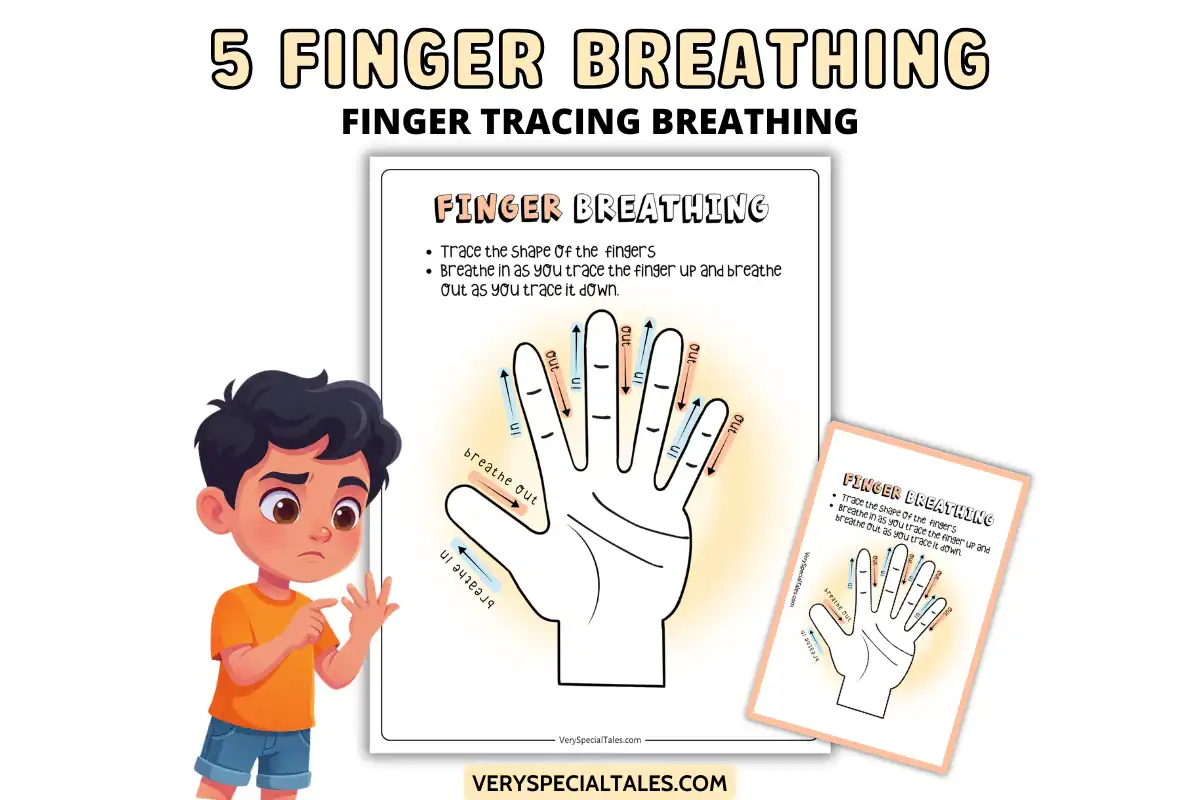
- Hand breathing
Once the idea caught on, people started getting creative. Kids can now trace rainbows, flowers, rockets, or any shape that captures their interest while breathing along the path.
And honestly, you don’t even need special cards to get started. I’ve doodled a simple shape on a scrap piece of paper and used it as a calming tool during tough moments. It works just as well.
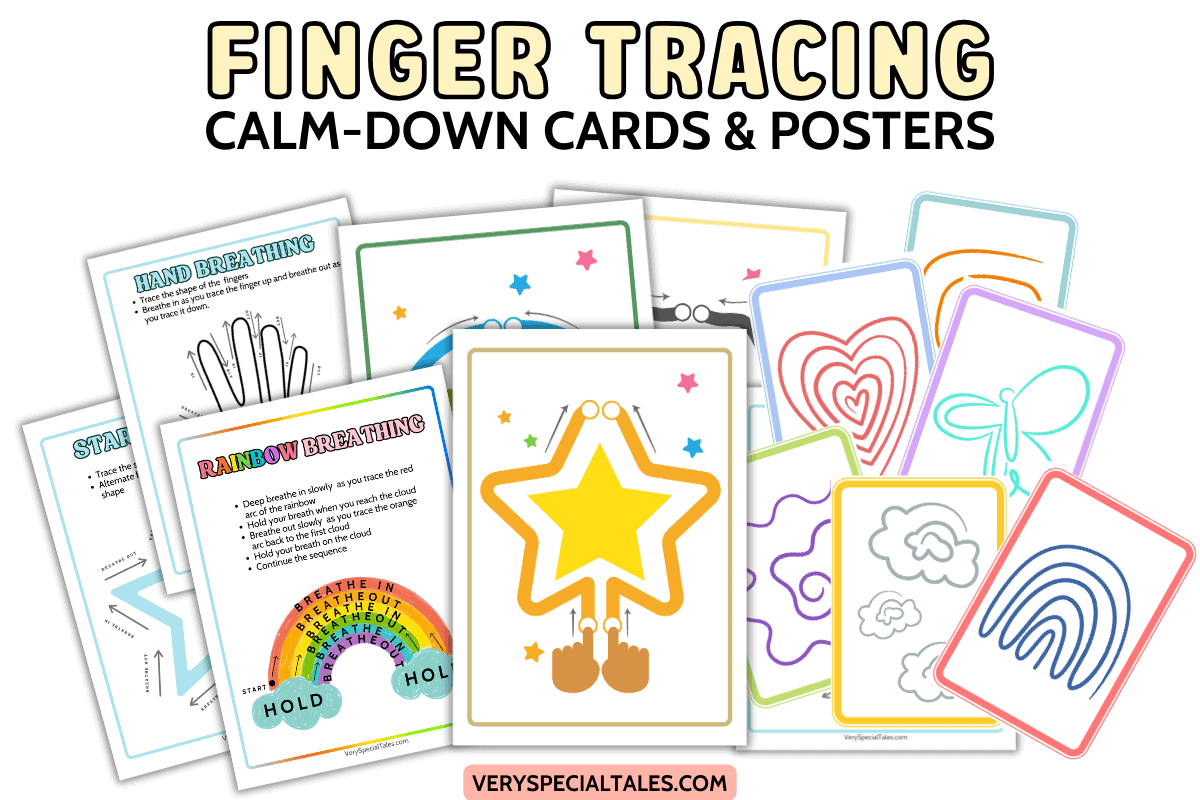
Breathing & Tracing Resources: As part of your free download, you’ll find 5 calming posters that combine simple shapes with breathing prompts. These visuals guide children through slow, intentional breaths while they trace, making breathing exercises easier and more engaging.
When kids trace a shape while following breathing prompts, it brings together touch, movement, sight, and breath all at once. This mix of sensory input helps them stay focused, slow down their breathing, and start to feel calmer.
2. Use Tracing on Its Own to Calm Down Big Feelings
You don’t have to connect finger tracing to a breathing exercise for it to be effective. Tracing abstract forms or doodles, whether on cards or posters, can work beautifully as a standalone calming tool.
This kind of tracing is especially helpful:
- When a child is overwhelmed and needs a quick reset
- As part of a calm-down corner or routine
- For quiet transitions or breaks

Finger Tracing Resources: Your free set includes 12 finger tracing cards that may help kids calm down, refocus, or self-soothe during challenging moments. They’re perfect for calm-down boxes, classrooms, or home routines.
Tracing provides structured, repetitive movement that offers predictable sensory input. This can help calm the body, reduce stress, and gently shift attention away from overwhelming feelings.
3. Bilateral Finger Tracing for Calming and Coordination
Bilateral tracing involves using both hands to trace mirrored shapes at the same time, like butterfly wings, hearts, or mandalas. This type of movement is often calming, especially for children who are overwhelmed, overstimulated, or full of restless energy.
It’s a great fit for:
- Calm-down corners
- Sensory breaks
- Transition times
- Kids who respond well to movement-based regulation
Bilateral tracing also supports:
- Fine motor coordination
- Visual-motor integration
- Left–right brain communication
Tip: Because it involves both arms moving outward from the center, bilateral tracing works best on a large surface, such as a poster or a big sheet of paper.
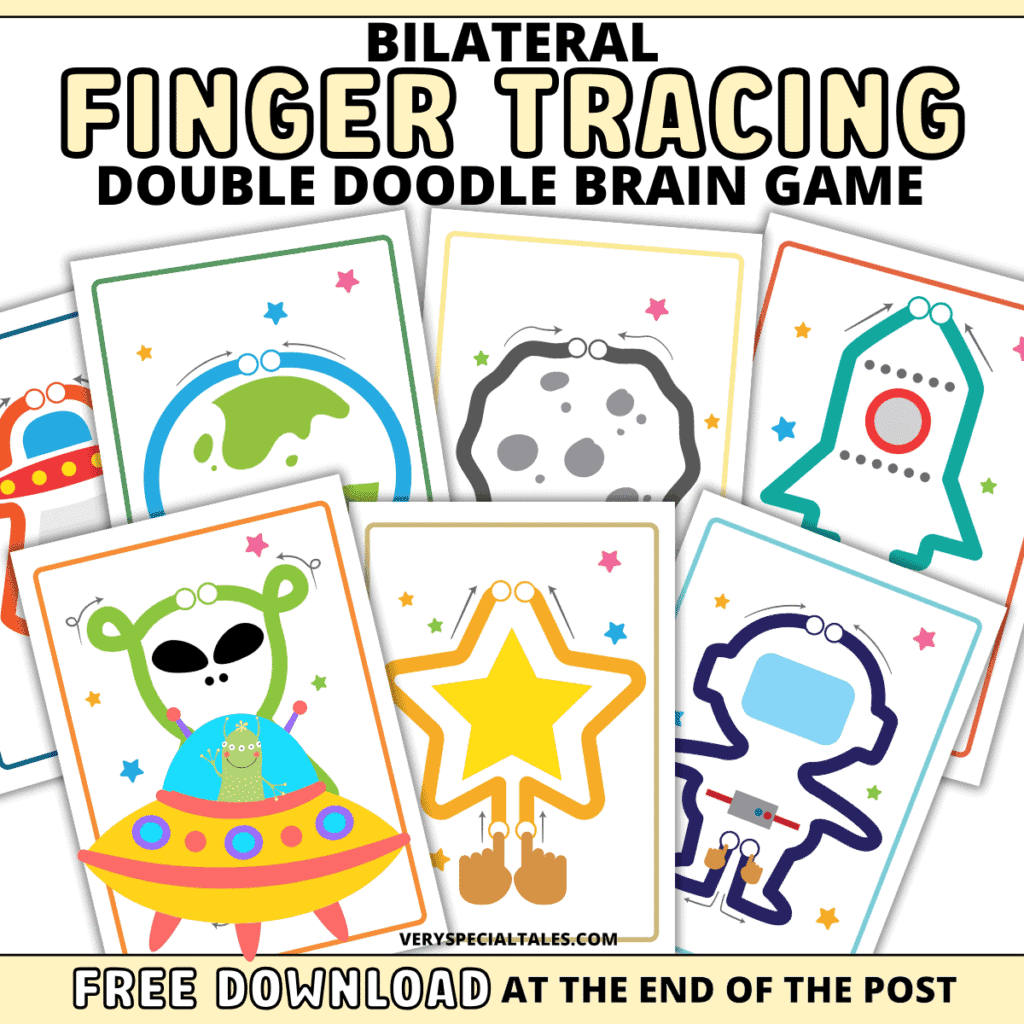
Bilateral Finger Tracing Resources: The bilateral finger tracing posters included in this resource are space-themed double doodle brain games. These symmetrical designs are perfect for two-handed tracing and provide a playful way to engage children in calming, cross-body movement.
Cross-body movement helps the brain coordinate more effectively and supports a sense of balance and focus. For many kids, tracing with both hands in a symmetrical pattern feels soothing and helps them settle during emotional or sensory overload.
Free Finger Tracing Calming Cards & Posters (PDF Download)
Your free download includes a variety of calming tools to support emotional regulation through breath and movement:
- 5 Breathing & Tracing Posters
- 12 Finger Tracing Cards
- 8 Bilateral Tracing Posters
Print them out and keep them on hand for calming moments at home, school, or in a quiet corner.
Other Deep Breathing Resources
- 14 Fun Breathing Exercises for Kids for Home or the Classroom (Printable included)
- Fun Yoga Breathing Exercises for Kids: Animal Breathing (Printable included)
- Belly Breathing for Kids: Fun Ways to Practice Diaphragmatic Breathing at Home
- Lazy 8 Breathing & Other Deep Breathing Exercises Using Shapes (Printable included)
- Square Breathing (Video Tutorial + Free PDFs- Including a Box Breathing Inspired Game)

Great tool!
Can’t wait to use these with my students.
These will be great to use on our sensory wall for our special needs students!
Thanks