
A Happy Place worksheet is a simple but powerful tool that helps kids and teens imagine a place where they feel calm and safe. That place can be real or imaginary, quiet or lively, indoors or outdoors. What matters most is how their body feels when they picture it.
In this post, I’ll explain how this activity works, share practical ideas for using it, and include a free printable version you can download at the end.
This mindfulness activity is not about forcing positive thoughts or pretending problems do not exist. It is about helping children cope when emotions feel overwhelming by offering simple prompts and reminders that help them access a calmer mental space.
How a Happy Place Visualization Works
When a person imagines a calming place in detail, the brain and nervous system can begin to respond as if that place were real. Focusing on sensory details such as what can be seen, heard, or felt supports relaxation, steadier breathing, and reduced tension.
With practice, this imagined place can become a familiar mental anchor, something the person can return to when emotions start to rise.
A Happy Place worksheets can be especially helpful in everyday situations such as anxiety or worry, emotional overload, difficulty calming down after conflict, and busy or overstimulating moments like transitions. They work well as a preventive tool, but they can also be used when emotions are already running high.
What a Happy Place Worksheet Looks Like
A Happy Place worksheet invites the child or teen to pause and focus on a place that helps them feel calm and safe.
Most versions include space to name or describe the happy place, along with a visual area where students can draw, sketch, or represent it in their own way.
Many worksheets also use gentle prompts to guide attention to sensory details, such as what they might see, hear, or notice in their body when they imagine being there. Some include a short reflection about when this place might be helpful.
The format can vary depending on age and purpose. For younger children, the worksheet is often more visual, with a stronger focus on drawing and simple ideas.
Below, you can see an example of a completed Happy Place worksheet. You’ll also find a free template you can download at the end of the post.

We took this idea a step further at home and made it even more visual. We created what we called a “Wall of Happiness,” where we added all the places, people, and activities that make us feel good and calm. For that version, we didn’t focus on detailed sensory prompts, just on gathering everything that helps bring a sense of comfort and happiness.
For teens, the worksheet usually leans more toward written reflection. It may look more like a journal page, with space to write freely, doodle, or jot down short notes and ideas they can revisit over time. Understandably, many teens may prefer to keep their happy place private, sometimes using it as part of a notebook or bullet journal rather than as a shared activity.
The goal is not to create a perfect description, but to help the student build a personal, calming reference they can return to whenever needed.
This worksheet is a place your brain can visit when your body needs a break.
Using It at Home, in the Classroom, or Other Supportive Settings
For me, the Happy Place worksheet is more an effective personal calming tool than a one-off activity.
Depending on age, setting, and individual preferences, there are many ways you might choose to use it.
- At home, the worksheet can naturally become part of a calm routine, for example, after school, before bedtime, or during moments of emotional overload. Some children like to keep their happy place somewhere visible, while others prefer storing it in a notebook or folder they can return to when they need a moment to reset.
- In classroom settings, you might find it helpful to introduce the idea briefly and then come back to it over time, rather than treating it as something extra to fit into an already full schedule. Once students have created their happy place, it can live in a calm-down kit, desk folder, or calm corner, so they can use it independently during transitions, after conflict, or when emotions start to rise.
- With younger students, the same idea can also take a more visual form, such as a shared poster or “happy places wall.”
- For teens, this is often used as a personal tool, sometimes kept in a notebook or bullet journal and revisited when they need a mental break.
This can also be a gentle coping tool for counselors or other support professionals to include alongside the strategies they already use.
Using the same approach across home, school, and other settings can help reinforce the idea that calming strategies are part of everyday life, not just something we turn to in moments of crisis.
Learning to calm down is a skill, and like any coping skill, it works best when you practice it and get familiar with it during calm moments.
A Happy Place worksheet is a simple tool to support emotional regulation. If you’re looking for an easy, low-prep way to help students practice calming strategies, this is a good one to consider.
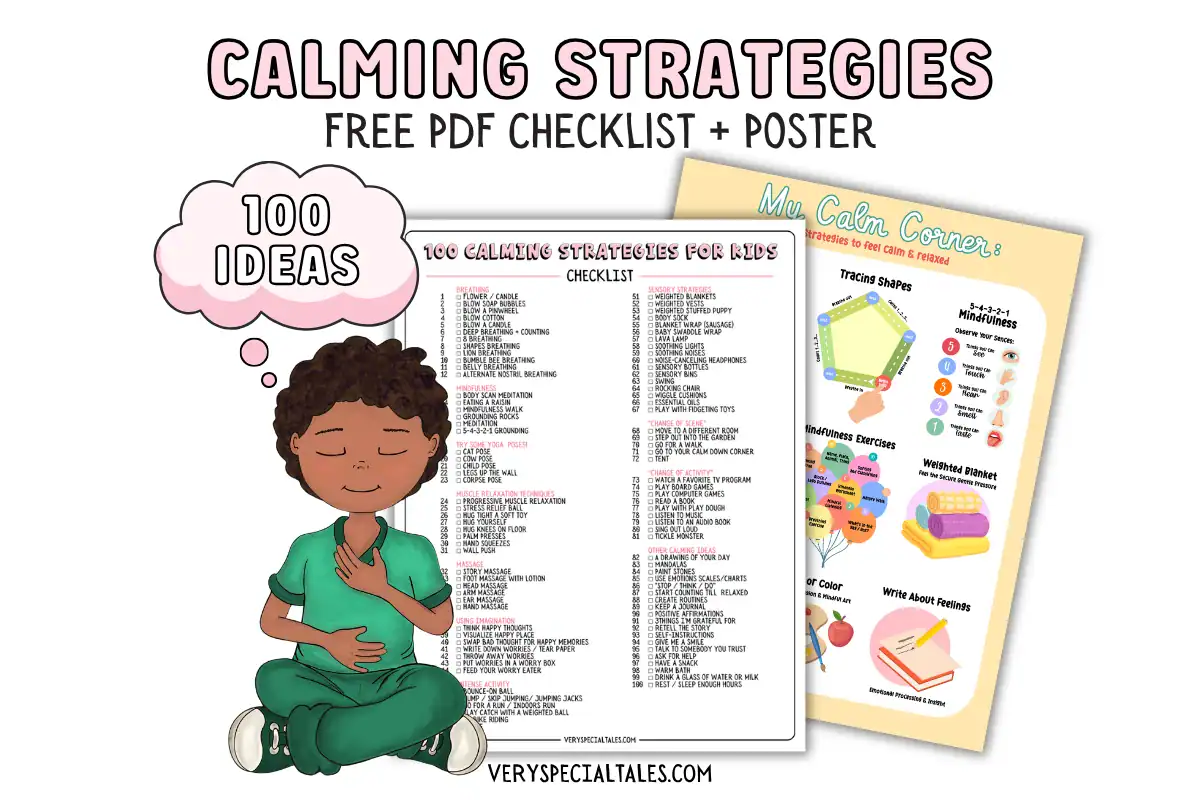
More Calm-Down Ideas and Resources

Other articles on calm and emotional regulation:
Download the Happy Place Worksheet (Kids & Teen-Friendly Versions)
Your free Happy Place PDF includes:
- A kid-friendly Happy Place worksheet with simple prompts and visual icons
- An example of a completed Happy Place worksheet
- A clean version without icons or illustrations, suitable for teens or adults