
Thoughts–Feelings–Behaviors Triangle Worksheets: Explore how thoughts, feelings, and behaviors are connected and constantly influence each other, and download your free CBT triangle worksheets for kids and teens (or adults!) to put the concept into practice right away.
Cognitive Behavioral Therapy (CBT) was first developed in the 1960s by psychiatrist Dr. Aaron Beck. While working with patients, and also reflecting on his own struggles with anxiety and depression, Beck noticed something important: the thoughts we have about a situation—more than the situation itself—shape how we feel and how we behave.
It’s a simple concept, but it can feel mind-blowing. Just think about it.
Two people might face the very same challenge. One person’s mind whispers, “I can handle this”. They feel calm, steady, and take confident steps forward. Another person’s mind throws out the thought, “I’m going to fail”. Suddenly, they’re caught in a wave of anxiety, their heart starts racing, and before they know it, their fear of failing turns into a self-fulfilling prophecy.
What is the CBT Triangle?
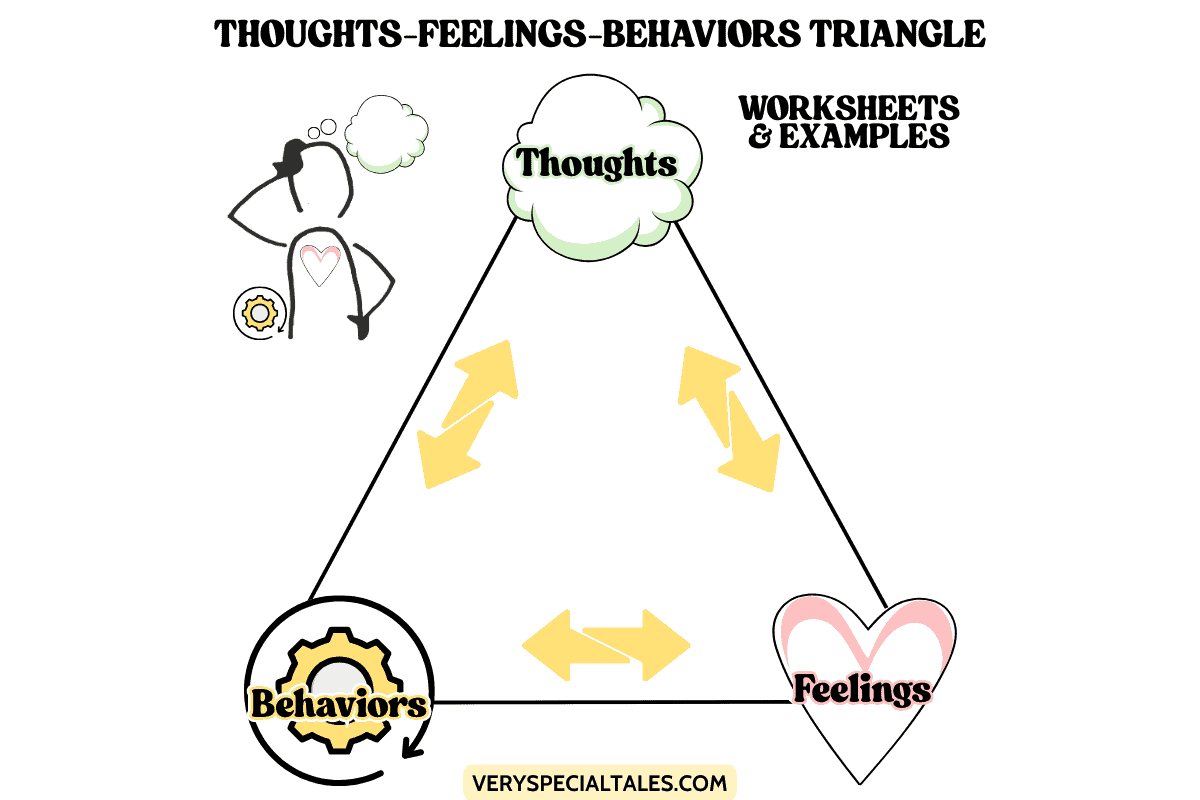
The CBT triangle is a simple way to picture how our mind and body work together. It shows three parts of our experience:
- Thoughts – what we say to ourselves in our heads
- Feelings – our emotions and the signals in our body (*)
- Behaviors – the things we do or how we react
These three parts are always connected, with each one able to influence the other two:
- A thought can spark a feeling, but it can also push you toward a certain action.
- A feeling can shape what you do, and it can also color the thoughts that pop into your head.
- And the things you do can affect how you feel and what you think about yourself.
The triangle works in every direction; thoughts, feelings, and behaviors constantly interact and feed into each other.
We’ve chosen to keep the triangle in this simple form, but it’s good to know that other models exist, too. One example is the “hot cross bun” model, which shows thoughts, emotions, behaviors, and physical sensations separately.
(*) In our version, we’ve kept body sensations as part of feelings because they’re such clear signals from our body. Often, emotions are easiest to notice through the way they show up physically—like a racing heart when we’re anxious, or tense shoulders when we’re angry.
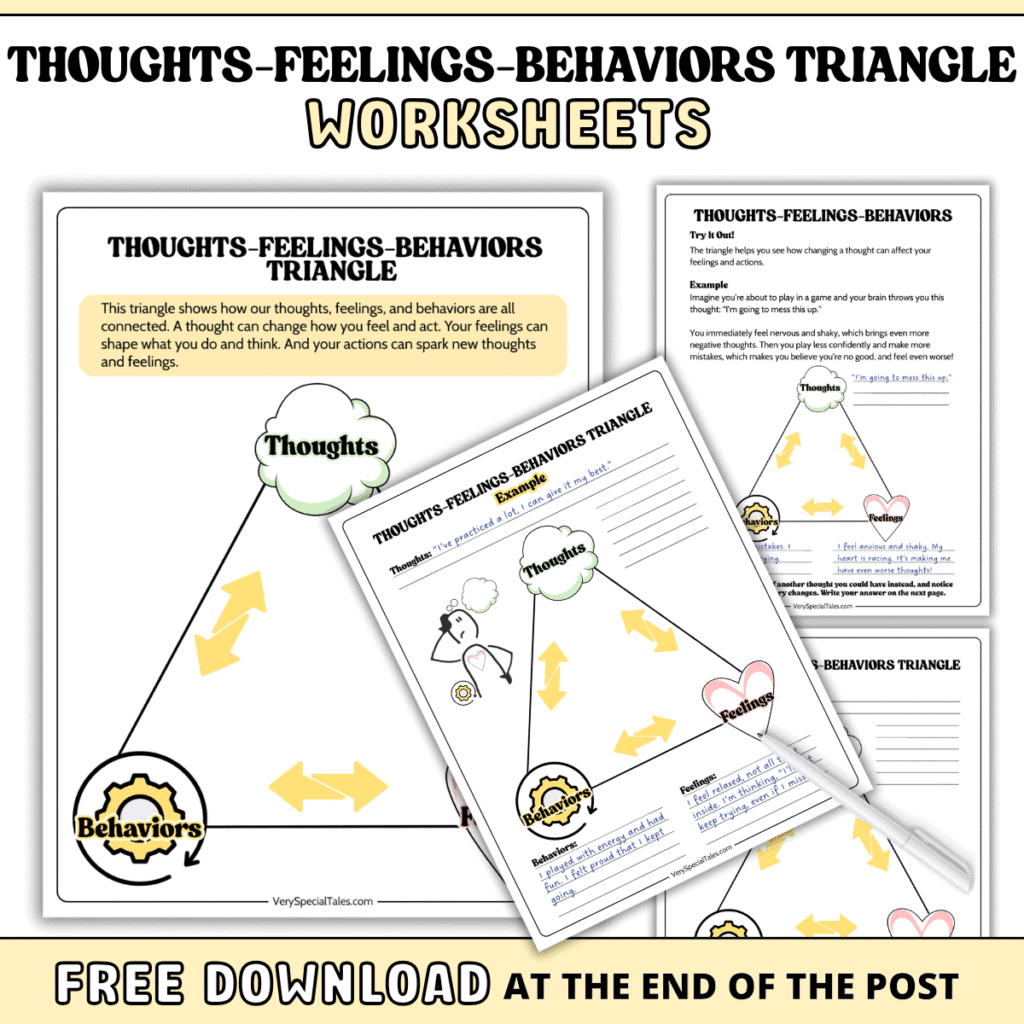
Thought–Feeling–Behavior Triangle for Kids & Teens
The CBT triangle is a simple tool that shows kids and young people the power of their own minds. It helps them see how thoughts, feelings, and behaviors interact with each other, and how a single thought can change the whole outcome of a situation.
At the end of this post, you’ll be able to download your free worksheets to practice the triangle together.
This simple exercise will help kids and teens:
- Notice how thoughts shape what they feel and do
- Understand that feelings don’t come out of nowhere
- See how thoughts, feelings, and behaviors all interact
- Learn that changing one part of the triangle can change the others
Here’s an example: imagine you’re about to play in a game.
- Thought: “I’m going to mess this up.”
- Feeling: Nervous and shaky. And those nerves spark even more negative thoughts like “Everyone will laugh at me.”
- Behavior: You play less confidently and make more mistakes, which then confirms the negative thought and keeps the cycle going.

Now look at it with a different starting point:
- Thought: “I’ve practiced a lot, I can give it my best.”
- Feeling: Calm and focused. Those feelings help you think more encouraging thoughts like “I can keep trying even if I miss.”
- Behavior: You play with more energy, keep going after mistakes, and your positive experience feeds back into stronger, more confident thoughts.
(Free) Download: Thought–Feeling–Behavior Worksheets
Your free CBT Triangle download includes two worksheets designed for kids and teens:
- Blank Thought–Feeling–Behavior Worksheet – A simple triangle template where children or teens can write their own thoughts, feelings, and behaviors.
- Example Worksheet – Ready-made situation with sample positive thoughts that link to alternative feelings and behavior outcomes.
Other Social-Emotional Learning Resources
- 12 Unhelpful Thinking Styles & Why You Should Challenge Them
- Worry Tree Worksheet (Teens)
- Coping with Test Anxiety (Strategies + Worksheets)


Thank you for such a great resource!
These are awesome!
Thank you so much! These are awesome and very helpful:)
Excellent resource