
Stress relief games and activities for students: Find effective ways to help your kids or students lower stress and deal with their big worries in healthy ways.
Stress arises when we face challenges or pressures that may seem beyond our ability to handle. It’s a reaction to feeling overwhelmed, a negative emotion that signals our body’s need to prepare for action or change.
Anxiety and stress share similarities as they both involve emotional responses to challenges or perceived threats. Stress tends to be a short-term response to a specific trigger, for example, exams or bullying. Anxiety, however, can linger even in the absence of the initial trigger.
This post explores practical stress management activities for students. We’ll cover strategies suitable for the classroom and others that may be more effectively practiced at home.
Stress and anxiety aren’t just challenges for adults; they’re very much part of kids’ lives, too.
A Gallup survey conducted from March 13 to 30, 2023, involving 2,430 U.S. college students in four-year programs, revealed that 66% reported feeling stressed, and 51% experienced worry during much of the preceding day.
A survey organized by the American College Health Association (ACHA) identified key factors impacting students’ academic performance, including:
- Anxiety affecting 30.4% of the students
- Stress impacting 37.3% of the students.
Why Are Students Stressed Out?
Students might face stressful situations as a normal part of their day-to-day experiences, for example:
- Heavy workload: Assignments, projects, and studying can pile up.
- Exams: The pressure to perform well on tests can be overwhelming, so exams are often perceived as stressful events.
- Time management: Balancing school, activities, and personal life is challenging.
- Future concerns: Worrying about college admissions or career paths.
- Social pressures: Navigating friendships, social media, bullying, or peer competition.
- Personal issues: Dealing with personal or family health, relationships, or financial problems.
- Lack of sleep: Sacrificing sleep for study or activities leads to exhaustion.
- Limited relaxation: Not having enough time to relax or pursue hobbies.
- Learning difficulties: Struggling with course material or learning disabilities.
Signs of Stress in Students
Teachers may observe signs of stress in their students through behaviors and changes that manifest in the classroom environment:
- Lack of participation in students who used to be active
- Drop in grades or the quality of homework and classwork.
- Fidgeting, sweating, or signs of nervousness during presentations or tests.
- Withdrawal from classmates during group activities or social times like lunch.
- Reacting more emotionally or aggressively to feedback, criticism, or normal interactions.
- Headaches or stomachaches that lead to frequent visits to the school nurse.
- Signs of tiredness or lack of energy, possibly due to poor sleep.
- Struggle with focus and attention in class
- Difficulty completing tasks.
- Significant changes in behavior, such as starting conflicts or acting out.
- An increase in absences or lateness can be a sign of avoiding school due to stress
Benefits of Implementing Stress Relief Strategies in the Classroom
Students may benefit from stress relief games and activities. Potential advantages include:
- Reduce stress, helping students feel calmer and lower anxiety.
- Increase focus, leading to better learning and concentration.
- Break the monotony, making school more enjoyable.
- Build resilience by teaching different ways to handle stress.
- Promote mental health and well-being.
Stress-Relief Games and Activities for Students
Teach your kids or students some basic stress relief techniques. This section outlines essential skills and techniques complemented by a variety of stress-relief games and activities.
Deep Breathing / Breathing Exercises
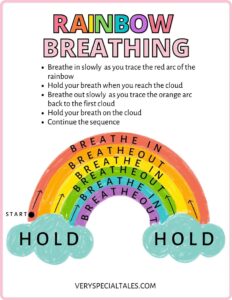
Deep breathing skills would be a great addition to the school curriculum.
Deep breathing is one of the most effective yet easy-to-implement calming tools. Taking deep breaths lets your student manage stress discreetly without drawing attention or feeling embarrassed.
Turn it into a game by teaching them fun breathing techniques like the lion breathing or the bumble bee breathing. Other fun breathing techniques include using shapes (squares, triangles, stars, etc.) that the child will trace with their finger while practicing deep breathing.
Related: 14 Fun Breathing Exercises for Kids for Home or the Classroom
Tensing and Relaxing Muscles
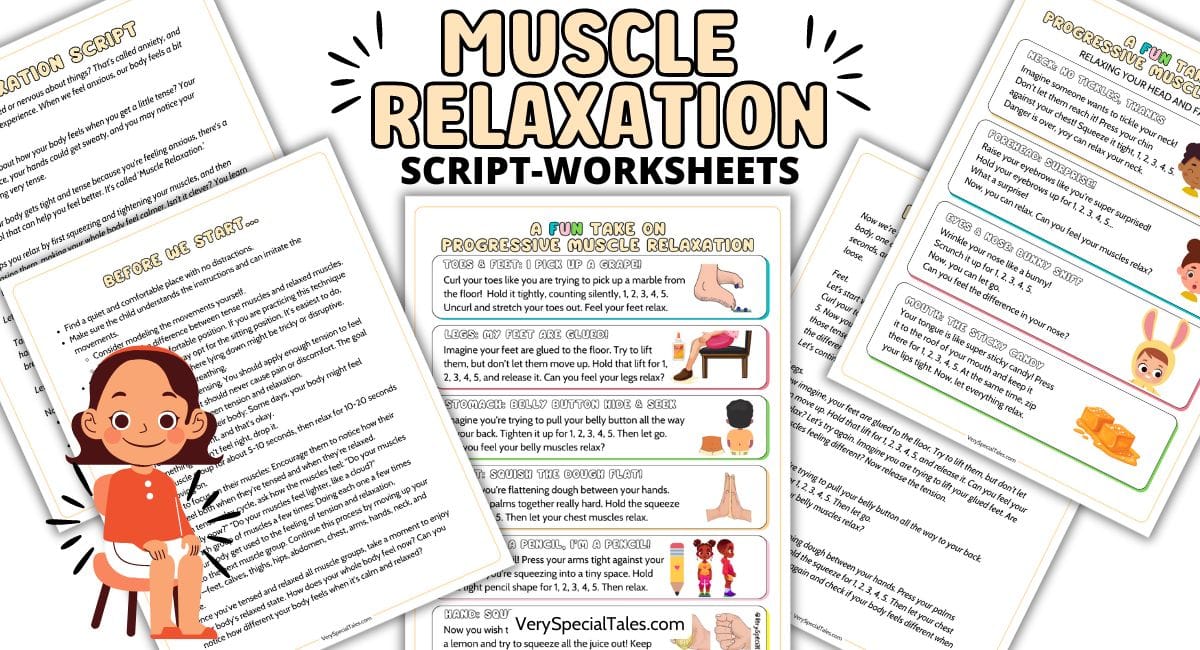
Tensing and relaxing muscles is an effective stress relief technique. This method reduces stress by creating muscle tension and then releasing it, helping to ease the body’s stress symptoms.
Related Reading: Progressive Muscle Relaxation for Kids (Script & Visuals)
Prepare DIY Stress Balls
Preparing stress balls can be a fun classroom activity. You can teach your students that squeezing and releasing a stress ball in their hand helps relieve tension (with an added benefit, as it also strengthens the muscles!)
The class can then create their own DIY stress balls (this DIY stress balls tutorial shows two simple ways to create them in less than three minutes).
Fidgeting
Fidgeting may help some students focus and self-regulate.
Some research has shown that kids with attention deficit hyperactivity disorder (ADHD) may find fidgeting beneficial, as physical movement may help concentration and focus.
If you wish to explore this topic further, I have a detailed post on using fidget toys in the classroom.
Mindfulness in The Classroom
“Mindfulness is the awareness that arises from paying attention, on purpose, in the present moment and non-judgmentally” Kabat-Zinn.
Mindfulness practice can be a useful tool for helping kids of all ages regulate their emotions and control their impulses and worries.
Simple mindfulness games and activities can help you introduce and develop these skills in your children while they play and have fun.
In this article, we explore 20 great mindfulness activities for kids.
Physical Exercise
Regular physical activity can reduce symptoms of stress and anxiety.
Regular exercise promotes relaxation and enhances mood, offering immediate stress relief even in small amounts.
Teach Problem-Solving Skills
Teaching problem-solving skills can act as a stress reliever by equipping children with the ability to tackle challenges methodically and with confidence.
Explore with your students the key components of problem-solving:
- Identifying the problem
- Analyzing the problem
- Generating solutions
- Evaluating all possible solutions (Pros and Cons Analysis)
- Selecting the best solution based on our analysis and judgment.
- Implementing the best solution
- Monitoring progress and results
- Reflecting on the outcomes
Teach Planning and Organizational Skills
Teaching planning and organizational skills helps students manage their workload more effectively, reducing the feeling of being overwhelmed, which can lead to stress. These skills enable students to break tasks into manageable steps, prioritize their work, and meet deadlines more efficiently, fostering a sense of competence and reducing anxiety.
Related reading: 30+ Time Management Tips & Activities for Kids
Coloring Activities
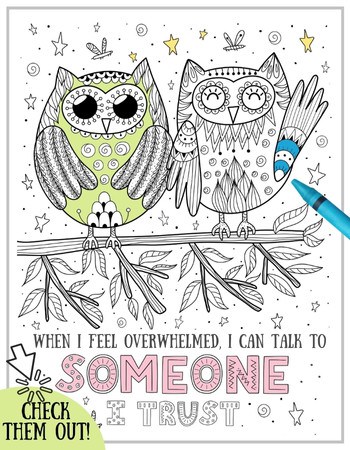
Research suggests that coloring or drawing activities may help reduce anxiety and decrease heart rate.
So, let your students grab a coloring book and see the negative feelings disappear while they engage in a creative activity.
Related reading:
- 18 Anxiety drawing ideas for kids (and adults!)
- Anxiety coloring pages for kids
Anxiety Affirmations
Anxiety affirmations are self-statements that we can use in situations that we perceive as a threat.
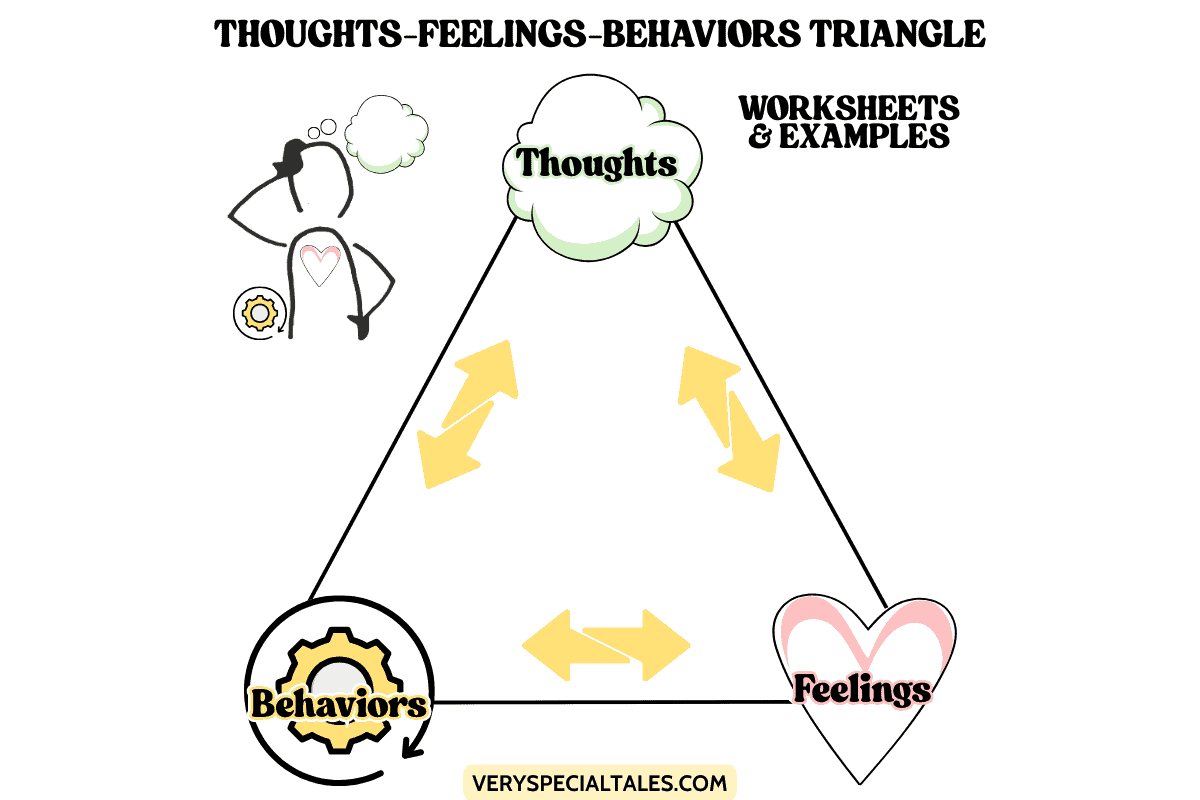
Those stressful situations may trigger negative thoughts that we can question with statements that
- challenge unhelpful thoughts
- focus on our strengths
- highlight personal values
- remind us of calming strategies to help us cope with physical symptoms
- contribute to a positive growth mindset
Two engaging activities that leverage the power of affirmations can bring creativity and positivity into the classroom:
- Creating Written Affirmations: This activity involves students writing their own positive affirmations. It’s a reflective exercise that encourages them to think about their strengths and aspirations, helping them build a positive mindset.
- Designing Affirmation Cards: Students can take a more artistic approach to creating affirmation cards. This involves both writing affirmations and decorating cards to reflect the positive message. It’s a creative way to engage with affirmations and adds a personal touch to their positive thoughts.
- Positive Affirmation Exchanges: Kids share uplifting messages with each other to build confidence and positivity.
For inspiration:
- 80 Positive Affirmations for Anxiety (Blog post)
- Anxiety Affirmation Cards (Printable product)
Stress Classroom Workshop
Consider hosting a classroom workshop where students can:
- Learn about stress (triggers, symptoms in their mind and bodies)
- Explore stress-relief strategies
- Practice strategies with games and activities (like e role-playing scenarios, group discussions to share experiences and tips, or mindfulness exercises)
Anxiety Books and Workbooks
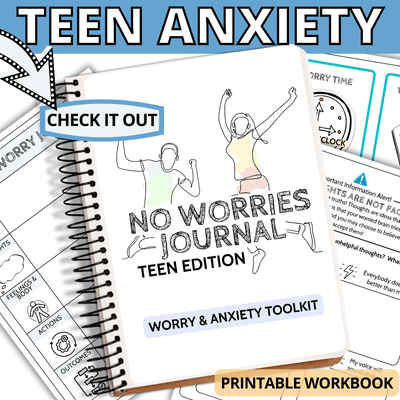
We have developed some great resources to help kids and teens navigate their worries and feelings of stress and anxiety. These workbooks cover a wide range of anxiety-related topics: biology, triggers, strategies, worry thoughts and the role of imagination, how worry may affect everyday life, the trap of avoidance behaviors, etc.
You may check them below:

I’ve also curated a list of great books for kids of all ages. You may check them out in the article below:
But, whether or not a book directly addresses anxiety, simply reading can be a powerful tool to help kids distract from stress and worry.
Calming Box / Calm-Down Corner
Create a “calm-down corner” or designated calming space where children can go to manage their big emotions when feeling overwhelmed, upset, or stressed out.
If space is an issue, a calming box may be your next best option. A calm-down toolbox allows your students to access all the items that facilitate their calm-down strategies easily.
Check out our Calming Box/Calm Down Corner Easy Guide for tips and advice on implementing either of those two helpful tools.
Brain Break Activities
Brain breaks are physical or mental exercises between periods of educational work designed to provide mental rest and help the brain refocus and recharge.
Taking a short break during class may also help reduce stress, allowing students a chance to relax and refresh their minds.
Many of the activities and games mentioned here can work as brain breaks. But if you wish to check out many more ideas, I recommend the following article:
Other Fun Stress-Relief Activities
These are some examples of fun activities to help relieve stress in the classroom.
- Silent reading time
- Group meditation or guided imagery
- Short stretching or yoga session
- Silent writing prompts
- Walks around the school
- Origami or simple craft-making
- Gratitude circle (sharing things they’re grateful for)
- Storytelling circle (sharing stories or experiences)
- Indoor scavenger hunts
- Quick classroom cleanup races
- Doodle time
- Classroom circle where everyone shares a positive thought
- Music time (listening and discussing)
- Peer teaching sessions on hobbies, interests, or school topics
- Classroom picnic (indoor or outdoor) / Shared lunch
- Guided journaling or diary entries
Best Stress-Relief Games
Games, even those not specifically designed to target stress, can serve as effective stress relievers for kids by providing a fun escape from worries or challenges and promoting social interaction and laughter. Some fun ideas that are easy to implement in the classroom:
- Classroom karaoke
- Pictionary or drawing games
- Quick dance-off to a fun song
- Indoor scavenger hunt
- Quick classroom cleanup races
- Bubble wrap popping (noisy but so pleasant! This one may be a good idea for home)
- Charades
- Puzzle games
- Puzzle-solving as a group
- Jigsaw puzzle
- Simon Says with stress relief movements
- Educational board games
- Card games
- Classroom comedy hour (sharing jokes)
- “Classroom Olympics” with simple, fun competitions
After-School Soothing Activities
After a busy day at school, incorporating stress relief activities into the daily routine can help reduce stress levels.
Here are a few things kids can try to help them unwind:
- Outdoor Activities: Spending time outdoors, whether playing sports or simply running around, can help reduce stress and improve mood.
- Creative Arts: Activities like drawing, painting, or crafting allow for creative expression and can be very soothing.
- Reading for Pleasure: Getting lost in a good book can be a great escape and a way to unwind.
- Listening to Music or Podcasts: Calming music or engaging podcasts can help children relax and find enjoyment.
- Play phone or computer games like Candy Crush, Minecraft, or their favorite game!
- Rest and Nutrition: Ensuring they get enough sleep and eat balanced meals can also play a crucial role in managing stress effectively.