Bullying Activities for Kids: Explore creative ways to teach kids of all ages about bullying. At the end of this post, download your two free anti-bullying activities.
Bullying is a serious problem that can have long-lasting impacts on a child’s mental and emotional health.
Studies show that about 1 in 5 students experience bullying at school. The effects of bullying can be serious—kids who are bullied are more likely to struggle with anxiety, depression, and low self-esteem.
Addressing bullying early on by involving schools, parents, and communities in a comprehensive effort is crucial. Schools must establish systems for early detection and intervention, ensuring a safe environment for all students. Parents play a key role in encouraging their children to speak up and fostering values that prevent bullying behaviors.
It’s also important to teach kids how to stand up for themselves and others in positive, constructive ways and to encourage them to seek help from an adult if they witness bullying.
By working together, we can create the structures and support systems that make a real difference.
Table of Contents
- What is Bullying
- Roles: Bully-Victim-Bystander
- Types of Bullying
- 30+ Anti-Bullying Activities for Kids
- Other Bullying Resources
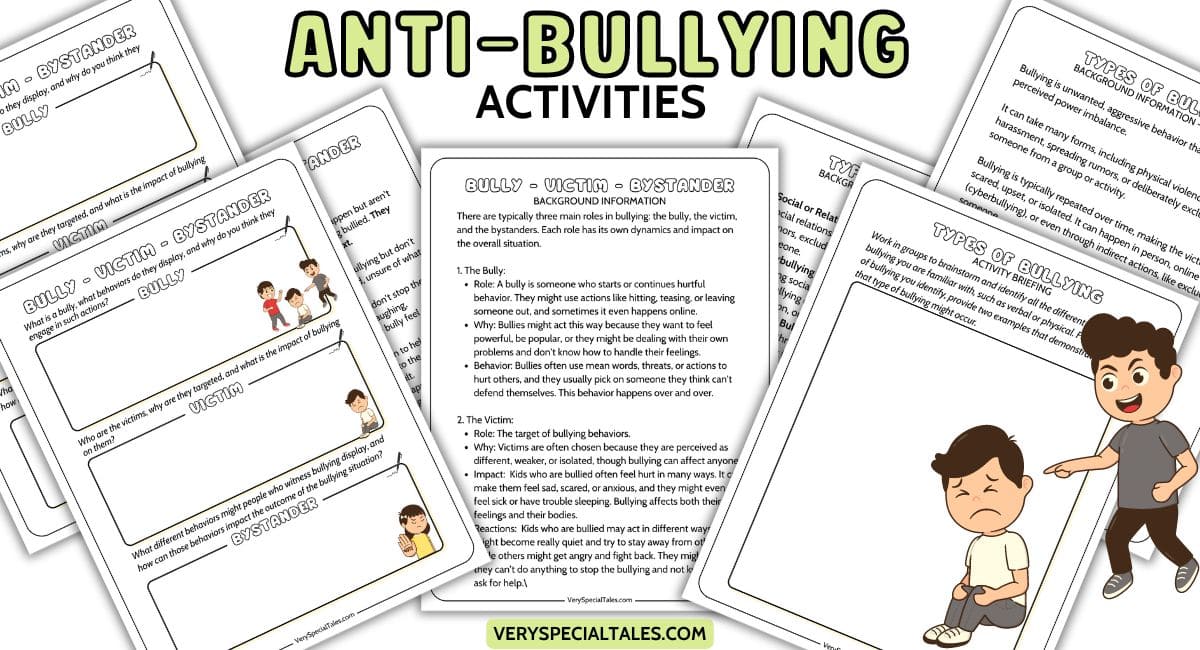
- Free Download: 2 Anti-Bullying Worksheets for Kids
What is Bullying?
Bullying is unwanted, aggressive behavior that involves a real or perceived power imbalance. It can take many forms, including physical violence, verbal harassment, spreading rumors, or deliberately excluding someone from a group or activity. Bullying is typically repeated over time, making the victim feel scared, upset, or isolated. It can happen in person, online (cyberbullying), or even through indirect actions, like excluding someone. The impact of bullying can be serious, affecting a child’s emotional, mental, and even physical well-being, and it’s a problem that requires attention from everyone in the community.
Bully – Victim – Bystander
There are three main roles in most bullying situations:
- A bully hurts others through threats, intimidation, or physical actions. They often do this to feel powerful or gain control through words, actions, or exclusion.
- The victim is the person being targeted. They may feel scared, alone, or powerless and could suffer from anxiety or low self-esteem because of the bullying.
- The bystander is someone who sees the bullying but isn’t directly involved. Bystanders can play a critical role in the situation by:
- Passively observing
- Encouraging the bully through silence, or
- Intervening to stop the behavior.
Common Types of Bullying
Bullying can appear in different forms, such as:
- Physical Bullying: Harming someone’s body or possessions. Examples include hitting, kicking, pushing, tripping, or damaging personal items.
- Verbal Bullying: Using words to hurt others. This includes name-calling, insults, threats, inappropriate comments, or teasing.
- Social or Relational Bullying: Damaging someone’s social relationships or reputation. It includes spreading rumors, excluding others, or encouraging others to reject someone.
- Cyberbullying: Bullying that takes place online through digital platforms, including social media, text messages, or emails. Cyberbullying can involve spreading rumors, sharing private information, or sending threatening messages.
- Prejudicial Bullying: Targeting someone based on their race, ethnicity, religion, gender, sexual orientation, or other identity factors.

30+ Anti-Bullying Activities for Kids
Addressing bullying requires many different approaches, including educating on how to address it, building empathy, and encouraging positive peer interactions.
The following activities are designed to help children understand bullying, create a supportive community, and promote kindness to make schools safer and more inclusive.
To make it easier to explore these activities, I’ve divided them into themes:
- Understanding and Addressing Bullying Directly.
- Fostering Empathy and Awareness.
- Building a Supportive Community.
- Teaching Kindness to Stop Bullying.
By organizing the activities into clear themes, I hope educators and counselors can easily incorporate them into lesson plans and school community initiatives, while parents can use them at home to help children recognize bullying, foster empathy, or promote kindness.
Understanding and Addressing Bullying Directly
These activities help kids recognize bullying and empower them to take action to prevent or stop it.
1. Difference Between Bullying and Being Mean Activity.
Ask your students to take some time to reflect on what bullying truly means. Have them write down their definitions of both bullying and meanness, exploring what these behaviors have in common and what makes them different.

2. Different Types of Bullying Activity.
In groups, ask students to come up with different examples of bullying they’ve seen or heard about. Then, have them share these examples with the class and work together to identify the different types of bullying present, such as verbal bullying, cyberbullying, prejudicial, and social bullying. This activity helps students recognize how various forms of bullying manifest and fosters discussion on how to address each type.
ℹ️ Types of Bullying Worksheet included at the end of post.
3. Role-Playing Bullying Scenarios.
For this activity, have kids act out bullying scenarios, focusing on these key points:
- Bullying Behavior: Identify actions like name-calling, exclusion, or physical harm or intimidation.
- Body Language: Notice how the bully may act aggressively, while the victim may look scared or upset.
- Victims Reaction: Recognize how victims might respond emotionally or physically to bullying.
- Bystanders: Discuss how others can either ignore, join in, or help stop the bullying.
- Standing Up: Practice ways to respond, like calmly confronting the bully, helping the victim, or seeking an adult.
4. Bullying Skits.
In groups, students create short skits depicting various bullying situations and demonstrating how to handle them effectively. The skits should include a clear conflict, such as verbal or physical bullying, and show positive ways to address the issue—whether through standing up to the bully, getting help from an adult, or supporting the victim. This activity allows each group of students to explore different roles, including the bully, the victim, and bystanders, to understand better how their actions can influence bullying situations.
5. Bullying Problem-Solving Brainstorm.
Kids brainstorm solutions to common bullying scenarios in groups.
Make sure each small group deals with a different type of bullying, for example social bullying, cyberbullying or physical bullying.
6. Create a “No Bullying Zone” Sign.
Have students work together to create a “No Bullying Zone” sign or poster to designate areas in the school or classroom where bullying is not tolerated. Encourage them to use bright colors, positive messages, and visuals representing kindness and inclusion. Once the signs are completed, place them in key areas like classrooms, hallways, or playgrounds. The objective is to establish a clear message of zero tolerance for bullying, fostering a safe and supportive environment for all students.
7. Bullying Conflict Resolution Role-Play.
Practice peaceful ways to resolve conflicts in bullying scenarios by having students act out different situations where bullying might occur. Focus on teaching them how to calmly communicate, seek help from an adult, or de-escalate tensions without aggression. This activity helps students build important problem-solving skills they can use in real-life conflicts.
8. Anonymous Advice Box.
Students can anonymously leave notes about bullying situations they’ve witnessed or experienced, allowing them to report issues without fear of being singled out. School staff can review the notes regularly and address the concerns privately.
This approach is becoming more common in schools, and it is a great way to encourage students who may be too shy or afraid to speak up openly to still report bullying incidents in a safe, anonymous way.
9. Cyberbullying Awareness Day.
The rise of social media, along with the increasing use of digital platforms for education and leisure, has made it even more important to teach kids about the dangers of cyberbullying and how to stay safe online. Start with a class discussion about what cyberbullying looks like, including examples like hurtful messages, spreading rumors, or sharing private information. Then, engage students in creating online safety guidelines to protect themselves and others, such as privacy settings and reporting harmful behavior.
10. My Anti-Bullying Plan.
Students create a detailed personal plan outlining their actions if they witness or experience bullying. If they witness bullying, they should identify safe ways to intervene, who to report the incident to, and how to support the victim. If they experience bullying themselves, the plan should include strategies for staying calm, where to go for immediate help, how to report the bullying, and how to seek ongoing support from trusted adults.
11. Create a Stop Bullying Poster.
Ask students to work on a “Stop Bullying Poster” that includes bullying prevention steps.
12. Bystander Empowerment Workshop.
Educate students about the crucial role of bystanders in bullying situations, explore the reasons why bystanders may hesitate to act, and empower them with strategies to intervene safely and effectively.
- Explain what a bystander/witness.
- Divide in groups and have them explore why bystanders may not intervene (for example, peer pressure, fear of retaliation, assuming others will help, not understanding what constitutes bullying.
- Ask them to reflect on the role of the audience in the bullying scenarios.
- Discuss strategies that bystanders can use to intervene safely, such as diverting attention to another topic, addressing the bully assertively, and seeking help from a trusted adult.
13. Bully-Victim-Bystander
Explore the different roles present in most bullying situations. Ask your students to describe each role—the bully, the victim, and the bystander—their behaviors, and the reasons behind them.

Your free download at the end of this post includes a Bully-Victim-Bystander worksheet.
Let’s also add some bullying games for your elementary students:
14. “Bullying Charades”.
Let’s turn this classic game into a character education tool!
Have students act out different bullying scenarios without speaking while others try to guess what type of bullying is happening (verbal, physical, social, or cyberbullying). After each scenario, the class discusses what they saw, how the bullying could have been prevented, and what a bystander could do to intervene.
15. Bully Judge.
The bully judge will decide if a situation qualifies as bullying. The judge holds two signs (Bully/Not Bully). Present different scenarios, and have the judge raise the appropriate sign based on their judgment, then explain their reasoning. After each scenario, pass the signs to the next student and continue with a new situation.
Fostering Empathy and Awareness
These activities build empathy by encouraging kids to understand how bullying affects others.
16. Empathy Mapping.
Kids write down how they think someone feels in different bullying situations, focusing on both the victim and the bully. This activity helps them understand the emotions involved and builds awareness of how their actions or words impact others.
17. Story Sharing.
Kids share personal stories or read books about bullying and discuss how they felt, reflecting on the impact the bullying had on everyone involved. This activity helps children connect with others’ experiences and promotes empathy and understanding through open discussion.
18. “How Would You Feel?” Game.
Kids put themselves in others’ shoes to encourage empathy by imagining how they would feel when experiencing bullying, such as being called hurtful names or excluded from a group. Then, the scenario is flipped to the opposite experience, where they imagine receiving kind words and support from others.
This activity helps children recognize the emotional impact of both hurtful words and positive behavior, teaching them the importance of using kind language and supportive actions in their interactions.
19. Art Expression.
Students create individual art pieces to express their personal feelings about bullying. Their work can reflect their own experiences, whether as victims, bystanders, or even as someone who may have unknowingly participated in bullying. The goal is to use visual art forms such as painting, drawing, or sculpture to explore and express complex emotions like fear, sadness, guilt, or empathy.
Building a Supportive Community
These activities encourage collective action, where peers work together to foster inclusion and prevent bullying.
20. Buddy System.
Pair students to support each other during recess or transitions, ensuring that no child feels isolated. This approach can be especially useful when you notice trends such as certain students being left out, signs of loneliness, or bullying. It can also be a proactive strategy for helping new students integrate into the school community. Thoughtful pairings ensure that students have support during unstructured times, fostering a more inclusive and supportive environment while reducing the risk of bullying.
21. Peer Mediation.
Train older students to mediate conflicts between younger kids and resolve disputes peacefully. Peer mediation is a solid and proven approach, but it’s important to tailor it to the students’ maturity levels and the types of conflicts they’ll be handling. Specifically for bullying, you could consider the following ideas:
- Training with a Focus on Bullying: Instead of expecting older students to mediate all types of disputes, the training can focus on handling low-level bullying behaviors (such as teasing or exclusion) rather than more serious cases, which adults should still manage. This keeps the role of the peer mediator manageable.
- Clear Guidelines: Provide older students with guidelines on when to intervene. For example, they can help younger students work through minor conflicts that might escalate into bullying, but anything involving aggression, threats, or repeated behaviors should be reported to an adult.
- Realistic Scenarios: Use role-playing to practice mediating common bullying situations, like resolving a misunderstanding or helping a student who feels excluded. This makes the role specific to preventing bullying rather than general conflict resolution.
- Support and Supervision: Ensure teachers or counselors support peer mediators, so they don’t feel overwhelmed. This also helps to monitor more serious cases of bullying.
22. Classroom Contract.
Ask the students to create a classroom contract that states clear respect rules. The contract should emphasize respect, kindness, and inclusion and can be a guiding tool for handling conflicts or addressing bullying. This contract could be the perfect way to promote a positive and supportive classroom community. And, involving students in the process gives them ownership over the rules, making them more likely to follow and uphold them.
23. Anti-Bullying Students Pledge.
In this activity, students create their own anti-bullying pledges, committing to their actions to create a safe space in the community.
Examples of anti-bullying pledges could be:
- “I pledge to treat everyone with kindness and respect and stand up for anyone who is being bullied.”
- “I will report bullying when I see it and do my best to create a welcoming and inclusive classroom for all.”
24. Anti-Bullying Assembly.
Organize a school-wide assembly where kids or experts talk about bullying.
25. Group Discussions.
Organize open discussions where students can express their thoughts and feelings about the school environment and brainstorm ways to create a more supportive school community.
26. Mix-It-Up Activity.
Encourage students to interact with new peers in various situations, such as during lunch, group work, or classroom activities. The goal is to foster new friendships and promote inclusivity. Be mindful of mixing students thoughtfully—while it’s important to bring different social groups together, make sure the pairings are supportive, avoiding known conflicts or negative dynamics.
At the end of the week, ask students to share one new person they got to know better and something positive they learned about them.
Related reading:
27. Pink Shirt Day Activity.
Pink Shirt Day, celebrated annually, is a day to stand against bullying and promote kindness and inclusion. The day originated in Canada when two students wore pink shirts to support a bullied classmate for wearing pink. More and more countries worldwide now celebrate this day to raise awareness about bullying.
For this activity, ask students to create T-shirt shaped posters where they can add their own anti-bullying message. These posters can be displayed around the school to reinforce the importance of kindness and inclusivity.
28. No-Name Calling Day.
Dedicate a day to focusing on positive language and avoiding any hurtful words or teasing.
Teaching Kindness to Stop Bullying
These activities aim to promote kindness and encourage positive interactions among students, helping to foster a culture of empathy, respect, and inclusion throughout the school community.
29. Compliment Circle.
Each child gives a compliment to the person next to them.
30. Compliment Cards.
Each student writes a positive note to a classmate and leaves it in a “mailbox” for distribution. Make sure every child receives at least one compliment card, so no one is left out. The notes should focus on kind words or actions that make each student feel valued.
Kindness Jar: Kids write down kind acts and pick one to complete each day.
31. Kindness Bingo.
Each student receives a bingo card with a 3×3 grid containing random acts of kindness (e.g., compliment a classmate, help clean up, share with a friend). Throughout the week, students aim to complete a line—horizontally, vertically, or diagonally—by performing the acts of kindness in the squares.
32. Kindness Challenge.
Create a weekly challenge where kids perform a set number of kind acts.
Related Reading: 101 Kindness Activities for Kids + Printable Kindness Challenge
I hope this article has succeeded in suggesting engaging ways to educate about and address bullying. Whether you integrate these activities into your school counseling toolkit, classroom lessons, or at home, I’m confident they will help foster a sense of community among elementary, middle school, and high school students.
Don’t forget to download your free resources at the end of this post.
Other Relevant Anti-Bullying Resources
If you wish to explore more resources on this topic, you can check these reputable organizations that work in bullying prevention.
- StopBullying.gov: This is a United States government website managed by the Department of Health and Human Services. It provides research-based information and resources on bullying prevention for schools, parents, and communities. The website offers guidance on recognizing, preventing, and responding to bullying.
- Olweus Bullying Prevention Program (OBPP): Developed by Norwegian psychologist Dan Olweus, this program is one of the most widely used and researched anti-bullying programs globally.
- PACER’s National Bullying Prevention Center: PACER is a well-known organization offering a variety of resources to help prevent bullying. Their site provides educational materials, campaigns, and toolkits for schools, parents, and students.
- The Trevor Project: While focused on LGBTQ+ youth, The Trevor Project provides resources for preventing bullying and supporting young people who are targeted because of their identity.
- Stomp Out Bullying: This nonprofit organization provides education, awareness, and support for bullying prevention, including cyberbullying. They offer resources for students, educators, and parents.
Other Social-Emotional Learning Resources
- Respect Activities for Kids
- Kindness Activities for Kids
- Empathy Activities for Kids
- Activities to Learn How to Share
- Activities for Kids to Learn About Responsibility
- Emotional Intelligence Activities
Download Anti-Bullying Worksheets
Your free Anti-Bullying Printable PDF includes the following activities:
- Bully-Victim-Bystander Worksheet
- Types of Bullying Worksheet
Download your bullying activities PDF by filling out the form below:


Thanks for all the information!
In our martial arts school, we changed the word “bully” from a noun to a verb. We also stopped using the word “victim” and used the word “target.” We are teaching our students that by labeling someone a bully or victim, we could be enabling them to feel like they can change. I love so much of these activities!
We look forward to sharing lots of these activities with our students.
This article has been very informative. Thank you
Great resource
As someone who was bullied all through school, I will not tolerate it in my classroom. Thanks for making this resource available.