Explore how to help teens build frustration tolerance when facing challenges, setbacks, unfair situations, and things not going their way. This post looks at different sources of frustration and shares 8 practical frustration tolerance activities to help teens respond more effectively.
What Is Frustration Tolerance?
Frustration tolerance is the ability to cope when things feel difficult, disappointing, unfair, delayed, or simply do not go as planned.
For teens, this can mean staying with a difficult task, handling mistakes or setbacks, waiting for an outcome, dealing with disappointment, or finding a useful response instead of giving up or reacting impulsively.
The goal is not to stop teens from feeling frustrated. It is to help them become better at handling that frustration and deciding what the situation actually needs.
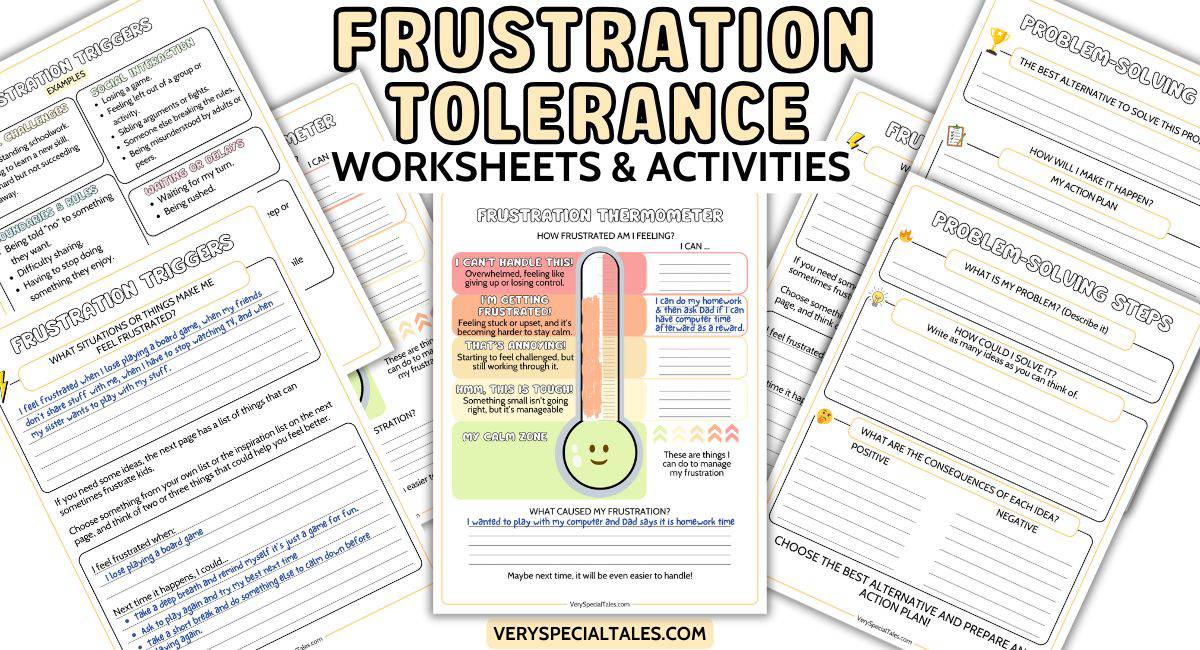
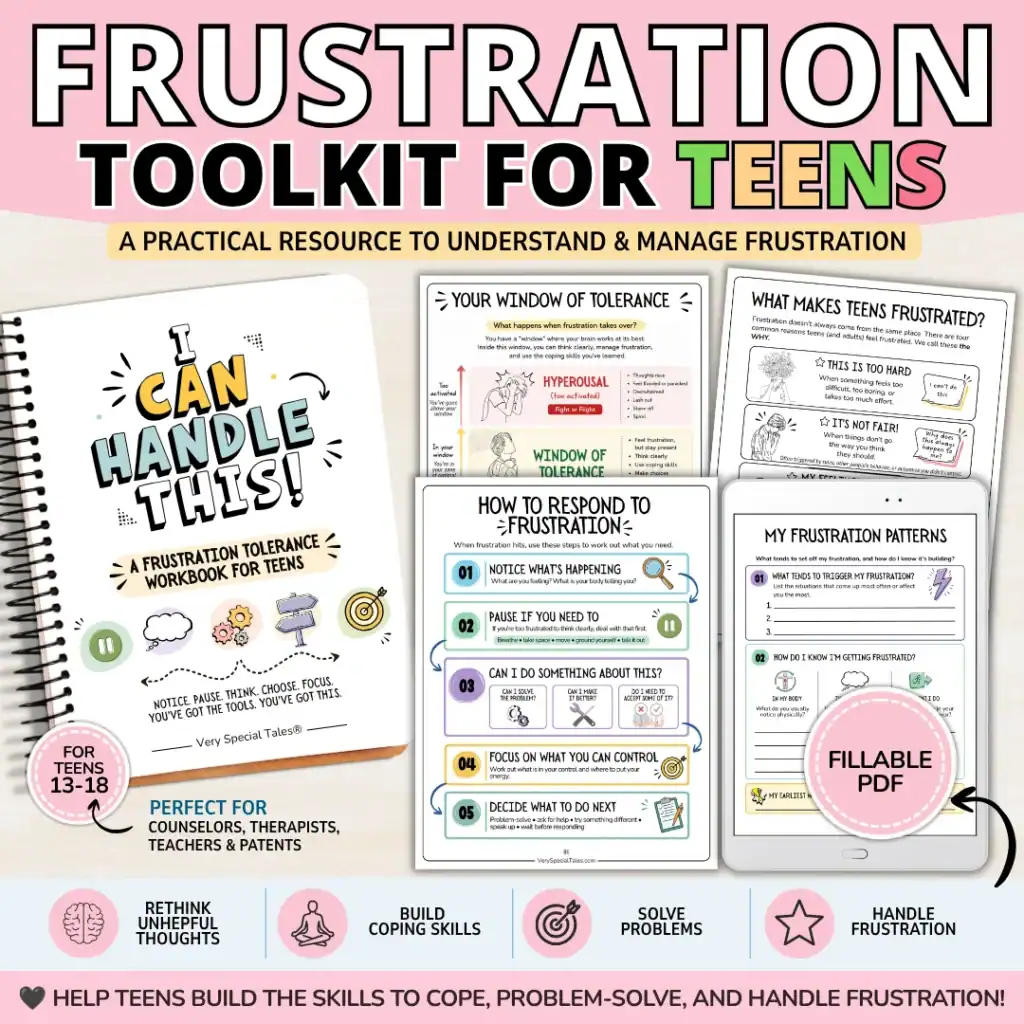
Looking for an in-depth frustration tolerance resource for teens? The Frustration Tolerance Workbook for Teens is a 90+ page printable resource that helps teens understand their frustration, build coping skills, work through problems and unfair situations, and create their own plan for handling frustration.
What Triggers Frustration in Teens?
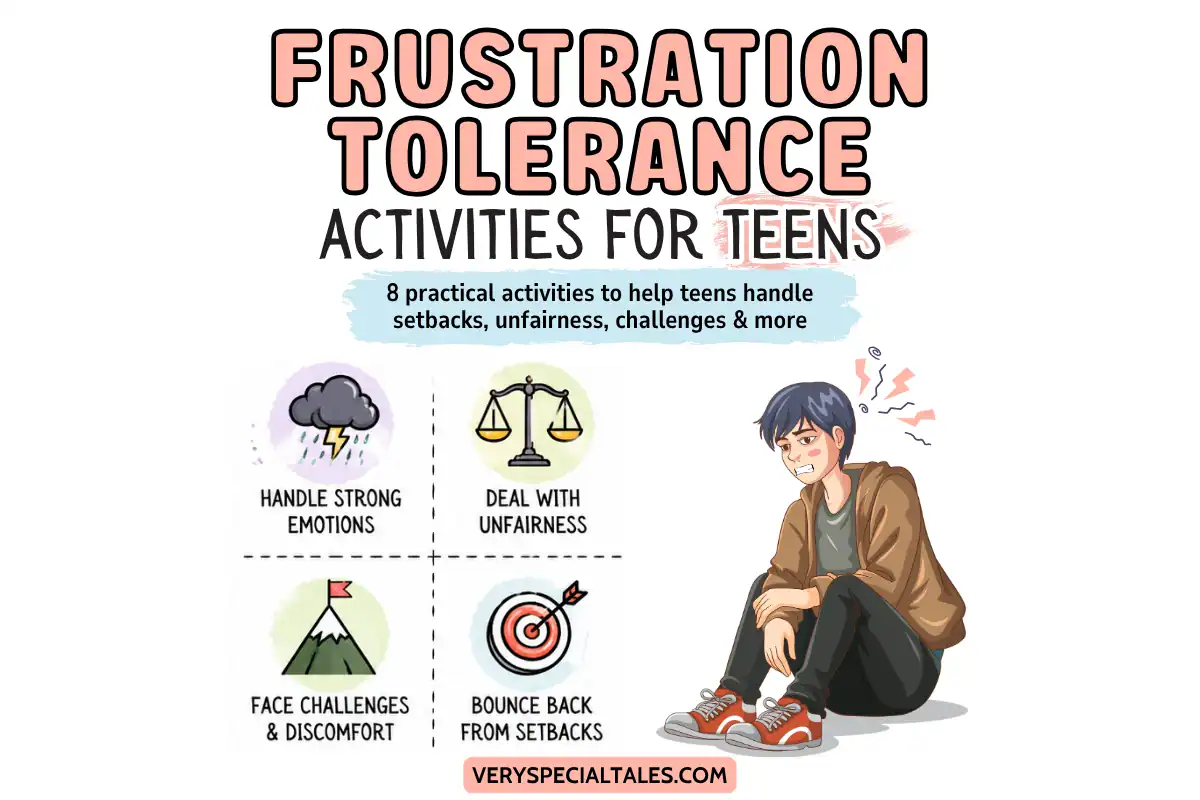
Frustration can be triggered by different kinds of experiences, but some common patterns tend to show up:
- Strong Emotions
When emotional distress or uncomfortable feelings become difficult to tolerate. - Things Feeling Unfair
When things don’t go the way you think they should, including rules, other people’s behavior, or outcomes you couldn’t control. - Discomfort & Challenges
When something requires effort, feels uncomfortable, or involves everyday hassles and inconveniences. - Setbacks & Goals
When things don’t work out, goals aren’t reached, or results fall short of expectations.
The categories above are adapted from research identifying four dimensions of frustration intolerance and simplified here to explore common sources of frustration.
Low Frustration Tolerance Examples in Teens
Low frustration tolerance can show up in different ways depending on the teen and the situation:
- Giving up quickly when a task feels difficult.
- Avoiding challenging tasks or situations because they might fail, lose, or make a mistake.
- Becoming very upset by mistakes or results that are not as good as expected.
- Struggling with waiting, delays, or being told “no.”
- Becoming very upset when plans change or things don’t go as expected.
- Abandoning a task when the first approach doesn’t work, rather than trying another way.
- Needing a problem fixed immediately before they can move on.
How to Build Frustration Tolerance in Teens
- Don’t remove every frustration too quickly.
Teens need opportunities to experience manageable frustration and learn that they can get through it. - Help them understand their frustration patterns.
What tends to trigger frustration? What happens when things get difficult? Do they give up, avoid, demand an immediate solution, or keep repeating an approach that isn’t working? Recognizing these patterns makes it easier to work on them. - Encourage them to stay with manageable frustration.
If something is safe and realistically within their ability, encourage them to tolerate some of the discomfort before quitting or escaping. That might mean trying once more, waiting a little longer, or staying with a difficult task for another few minutes. - Help them develop more than one response to frustration.
Depending on the situation, a teen might need to keep trying, take a break and return, ask for help, problem-solve, change their approach, speak up, or accept something they cannot change. - Explore what “I can’t” means.
Help teens distinguish between “I genuinely can’t do this” and “I can’t do this yet,” “This is harder than I expected,” or “I haven’t found a way that works.”
Sometimes the next step is more practice; sometimes it is help, a break, or a different approach. - Model how you handle frustration.
Let your young person see that adults also encounter delays, mistakes, setbacks, and things that simply don’t work. Showing how you pause, adjust, try again, or change course can be more useful than simply telling them what they should do.
Working with younger children? Head over to Frustration Tolerance Activities for Kids for 32 practical ideas to help kids handle frustration.
Frustration Tolerance Activities for Teens
Different sources of frustration call for different skills. The frustration tolerance activities below are grouped around the four frustration patterns we explored above: strong emotions, things feeling unfair, discomfort and challenges, and setbacks and goals.
Strong Emotions
When the feeling itself becomes hard to tolerate, the goal is to practice staying with manageable frustration without immediately escaping or reacting.
1. Ride the Wave
Choose a mildly frustrating situation and notice how the feeling changes over a few minutes.
Rate frustration from 1–5 at the beginning, then again a few minutes later.
Ask:
Did the feeling stay the same, get stronger, or start to ease?
The goal is not to force themselves to stay in an overwhelming situation. It is to experience a manageable amount of frustration and notice that feelings can change even when we don’t immediately act on them.
Related resources:
► 100 Calming Strategies for Kids
► Breathing Activities for Kids
2. Pause Before You Act
Use realistic teen situations and identify the first impulse: Quit? Argue? Send the message? Walk away? Give up?
Then ask: What could you do to create a short pause before deciding what to do?
The pause might mean taking a few slow breaths, stepping away briefly, getting a drink, grounding yourself, or simply waiting before responding.
The aim is not to ignore frustration. It is to create a little space between feeling frustrated and deciding what to do about it.
Related resource:
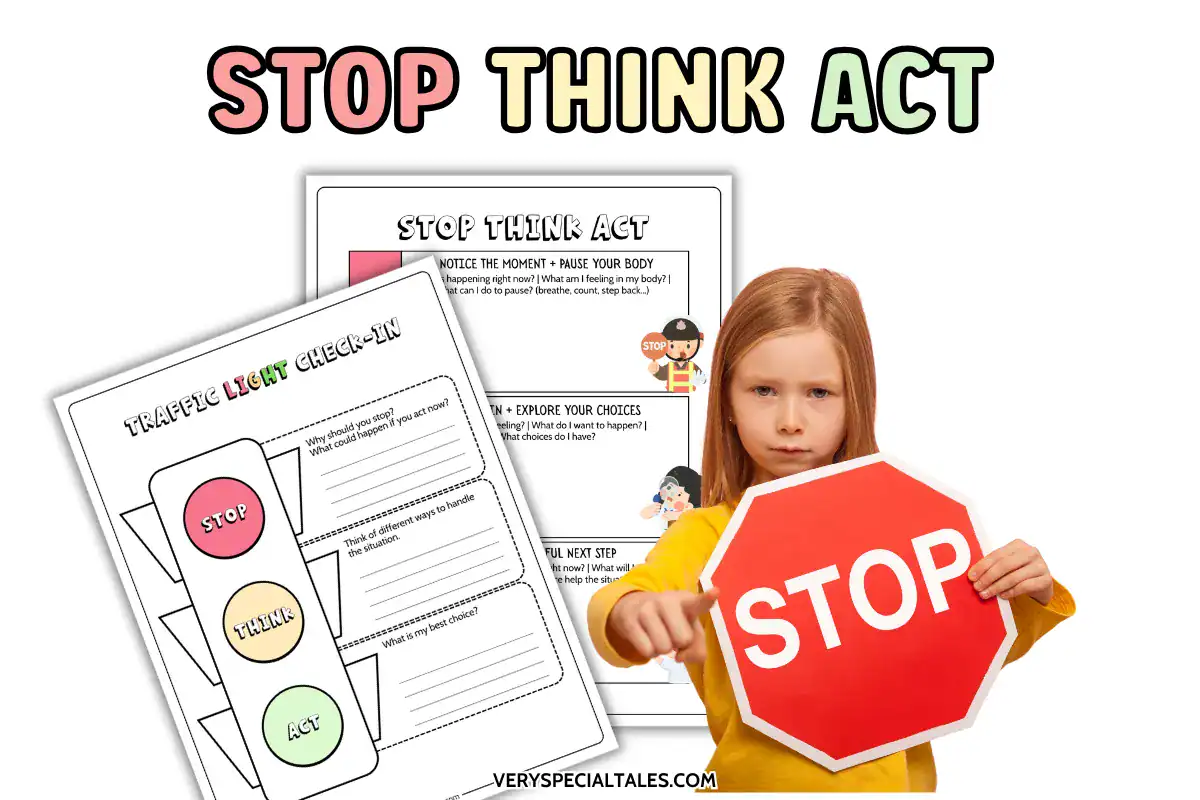
► Stop-Think-Act Worksheets and Activities
Things Feeling Unfair
When frustration comes from rules, other people’s behavior, or outcomes that feel unfair, the skill is not simply calming down. Teens may need to examine the situation and decide how they want to respond.
3. Fairness Debate
Feeling that something is unfair can be especially frustrating, but people do not always agree about what “fair” looks like.
Choose a situation where there could reasonably be more than one point of view. For example:
A teacher gives extra time to one student to complete an assignment, while everyone else has to meet the original deadline.
Ask the teen to explain why the situation might feel fair or unfair. Then have them argue the opposite position, even if they don’t agree with it.
This isn’t about convincing teens that something isn’t unfair. Sometimes it genuinely is. The activity practices looking beyond the first interpretation before deciding how to respond.
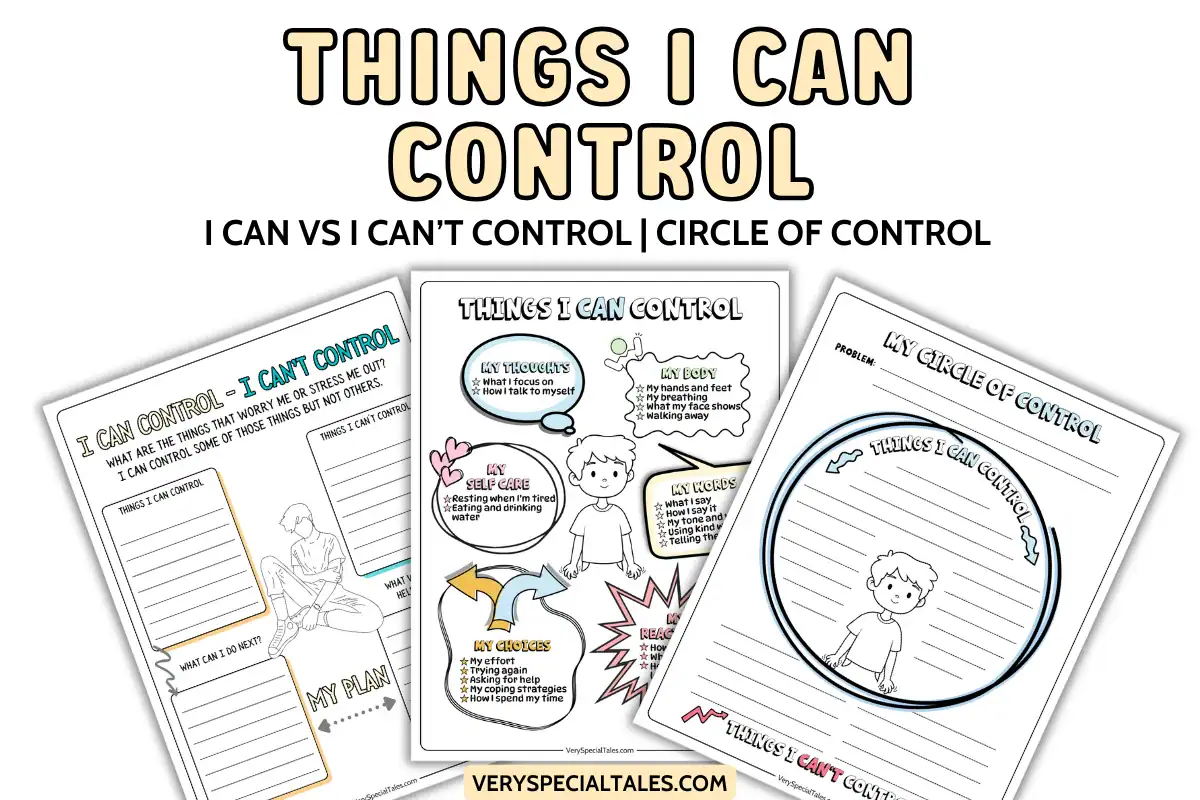
4. What Can I Influence?
Take a frustrating situation and divide it into:
Things I can influence
Things I can’t influence
Then choose one useful action from the first group.
This shifts the focus from trying to control the whole situation to deciding what they can realistically do next.
Related resource:
► Things I Can Control + Circle of Control (Worksheets)
Discomfort & Challenges
When frustration comes from effort, difficulty, hassles, or something not working straight away, teens need opportunities to practice tolerating manageable discomfort and staying flexible.
5. Try a Frustration Challenge
Frustration tolerance can be practiced in situations where the stakes are low.
Choose something that is safe, manageable, but genuinely a little frustrating. It might be a difficult puzzle, a brain teaser, learning a new skill, building something, or attempting something that probably won’t work perfectly on the first try.
Before beginning, set a small challenge such as:
- When I feel like quitting, I’ll try one more time.
- I’ll stay with it for another three minutes before deciding whether to stop.
Afterward, talk about what happened:
- When did you most want to give up?
- What helped you stay with it?
- Did your frustration change as you continued?
Success isn’t necessarily completing the task. The practice is in experiencing manageable frustration without automatically escaping it.
6. Try Three Ways
When the first attempt doesn’t work, frustration can quickly turn into “I can’t do this.”
Choose a problem, puzzle, task, or real-life situation and challenge the teen to find three possible approaches before deciding they are stuck.
That doesn’t necessarily mean attempting the exact same thing three times. They could:
- change their approach
- simplify the problem
- break it into smaller steps
- look for more information
- ask for a clue or some help
- take a short break and return
The point is to get them thinking about different ways to approach a problem when the first one doesn’t work. Sometimes getting unstuck means trying harder, but sometimes it means trying differently.
Related resource:
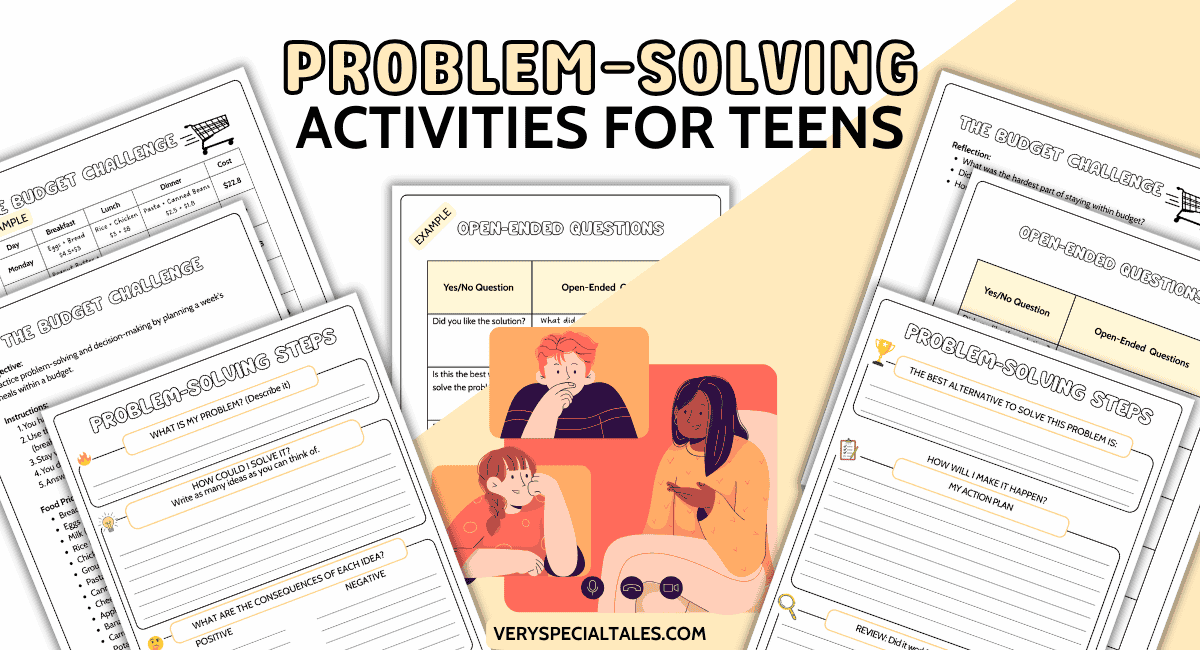
► Problem-Solving Activities for Teens
Setbacks & Goals
When frustration comes from not reaching a goal or getting the result you hoped for, the challenge is often what the setback starts to mean.
7. Separate the Setback From the Self
A disappointing result can quickly turn into a much bigger conclusion:
- I failed the test → I’m stupid.
- I didn’t make the team → I’m not good enough.
- This didn’t work → I can’t do anything right.
Take a real or imaginary setback and work through four questions:
- What happened?
- What am I telling myself it means about me?
- Is that the only way to interpret it?
- What could I do next?
A setback can be disappointing and still be one outcome, not a definition of who you are or what you are capable of.
8. Put “Yet” to Work
Simply changing “I can’t do this” to “I can’t do this yet” can sound encouraging, but the word yet is most useful when there is a realistic path forward.
Ask the teen to choose something they currently find difficult and complete:
I can’t do this yet. What might help me get closer?
For example:
- more practice
- clearer instructions
- help from someone
- more time
- a different strategy
- breaking the task into smaller steps
Sometimes the answer may also be that a goal needs to change. The point isn’t to insist that teens can accomplish absolutely anything if they try hard enough. It is to help them move from “I can’t” to thinking more flexibly about what might come next.
Related resource:
► Growth Mindset Activities for Kids
Other Frustration Tolerance Resources for Teens
Frustration Tolerance Workbook for Teens
Want to go deeper? The Frustration Tolerance Workbook for Teens is a 90+ page printable workbook that helps teens understand their frustration patterns, build practical coping and thinking skills, and work through difficult situations more effectively.
- Understand their frustration: Teens explore their triggers, how frustration shows up in their body, thoughts, and actions, and how to recognize when it is building.
- Build skills for handling frustration: Practical exercises cover coping tools, helpful thinking, growth mindset, and ways to respond when the first approach doesn’t work.
- Work through problems and unfair situations: Teens practice problem-solving, explore what they can and cannot control, and consider when to speak up, make things better, or accept and let go.
- Bring it all together: Reflection pages help teens identify the strategies and insights they want to remember and use when frustration shows up.
Save these ideas for later: