If-Then Planning for Kids & Teens (Examples & Worksheets): “If this happens, then I’ll do this.” It sounds simple, but it’s a surprisingly powerful tool that can help kids and teens prepare for many different situations: impulse control, frustration, worries, peer pressure, social conflict, and more.
If-then planning helps turn good intentions into action by deciding ahead of time what to do when a specific situation comes up.
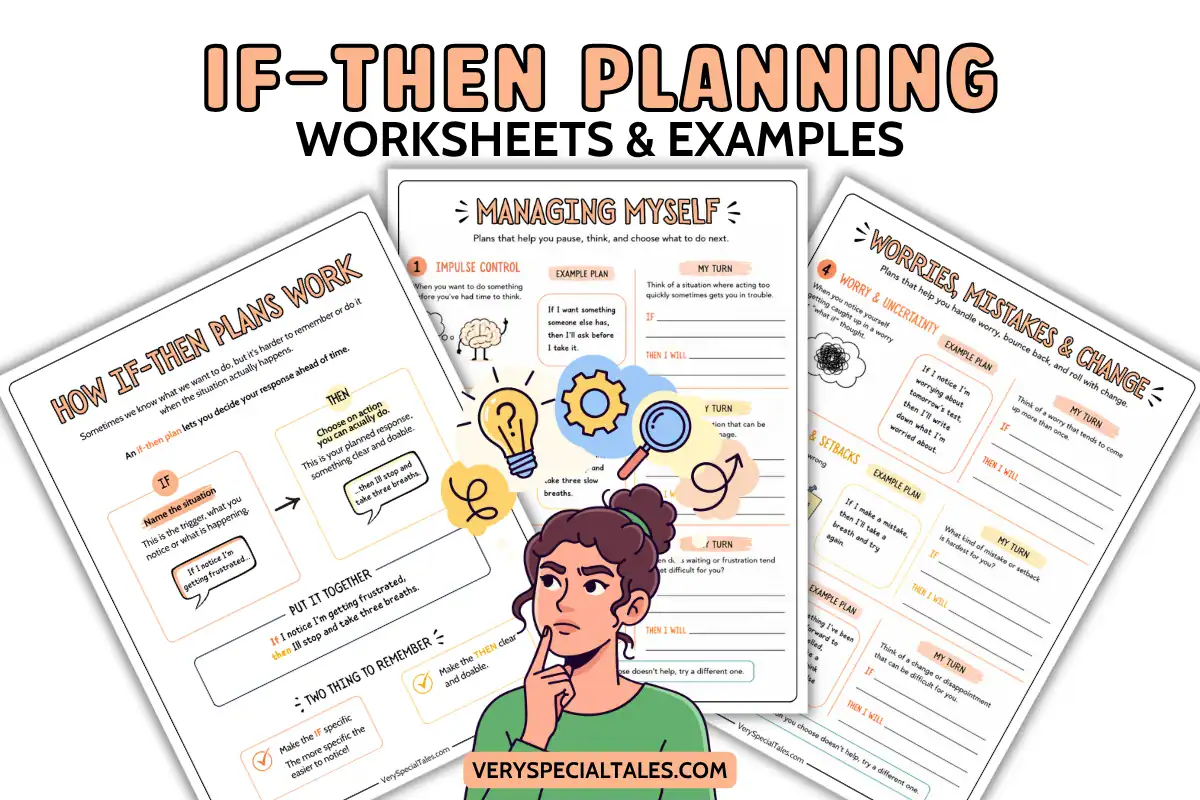
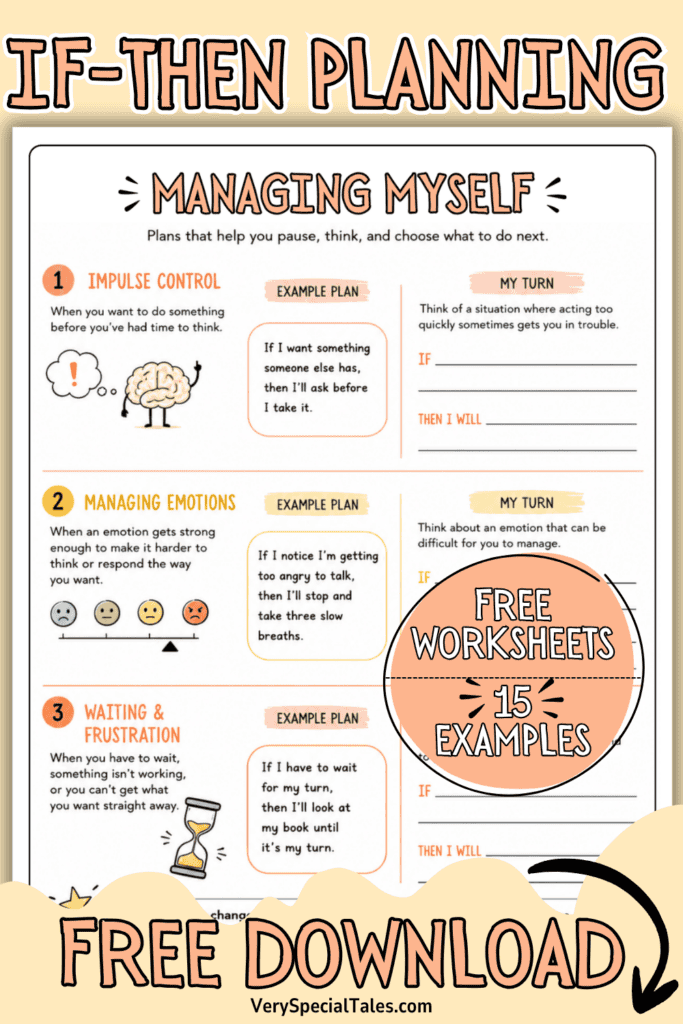
This post walks through nine different ways to use if-then planning, with a real example for each. At the end of the post, you can download the free If-Then Worksheets for Kids & Teens, with examples and space to create their own plans for 15 different situations.
Your child already knows they shouldn’t grab the toy. Your teen already knows they should start their homework instead of scrolling. Often, knowing what to do isn’t the hardest part. Doing it in the actual moment, when the feeling, temptation, or frustration is right there, is much harder.
What Is If-Then Planning?
If-then planning means deciding, ahead of time and in a calm moment, exactly what you’ll do when a specific situation comes up. It takes the shape: “If [situation happens], then I will [specific action].”
Psychologist Peter Gollwitzer coined the term implementation intentions for this type of planning in the 1990s. The idea is simple: a goal on its own (“I want to stay calm”) doesn’t tell you what to do when the difficult moment actually arrives. An if-then plan connects a specific situation with a specific response, making that response easier to remember and put into action when the situation comes up.
Why If-Then Planning Works
If-then planning helps bridge the gap between knowing what you want to do and actually doing it. By linking a specific situation (“if”) with a specific response (“then”), the situation itself can become a reminder of what to do next.
Children and teens are still developing the self-regulation skills that help them pause, remember what they intended to do, and choose a response when emotions are high. An if-then plan reduces some of that work by deciding on a response ahead of time.
Research specifically with children is encouraging. A 2026 meta-analysis of 42 studies involving nearly 13,000 children found that implementation intentions had a small-to-medium positive effect on goal achievement. The effects were stronger in younger children and, in some analyses, in children with ADHD, suggesting that if-then planning may be especially helpful for children who find self-regulation more difficult.
The strategy also has a much longer research history. An earlier meta-analysis of 94 independent studies found that implementation intentions had a medium-to-large positive effect on goal attainment compared with setting a goal alone.
This doesn’t mean a child or teen will always be able to follow the plan. But with a clear cue, a realistic response, and practice, an if-then plan can make it easier to put good intentions into action when the situation actually comes up.
How to Build an If-Then Plan
Step 1: Name the trigger.
Get specific about the moment that tends to go sideways. Not “mornings,” but “when I hear the five-minute warning before we leave.”
Step 2: Choose a specific response.
Pick one clear, doable action. “I’ll calm down” is a goal, not an action. “I’ll take three slow breaths” gives you something you can actually do.
Step 3: Say it as an if-then sentence.
“If the five-minute warning happens, then I’ll put my shoes on first.” Practice saying it out loud a few times when things are calm so it’s easier to remember when you need it.
One Rule, So Many Situations
This is what makes if-then planning so useful: the same simple structure can be adapted to many different situations. Here are nine ways kids, teens, and the adults supporting them can use it.
Impulse control.
Planning a response before temptation hits can make it easier to know what to do in the moment.
“If I want something someone else has, then I’ll ask first instead of grabbing.”
Managing emotions.
When emotions run high, having a first step already planned can help.
“If I notice I’m getting too angry to talk, then I’ll stop and take three slow breaths.”
Transitions.
Leaving somewhere fun or switching activities can be difficult, especially when a child is absorbed in what they’re doing.
“If I hear that it’s time to leave the playground, then I’ll say goodbye to the slide and walk to the gate.”
Waiting and frustration.
Choose something specific to do when waiting becomes difficult.
“If I have to wait for my turn, then I’ll look at my book until it’s my turn.”
Worry and uncertainty.
A planned response can help interrupt a cycle of anxious thoughts, while also giving the child a clear next step when a worry shows up.
“If I notice I’m worrying about tomorrow’s test, then I’ll write down what I’m worried about.”
Social conflict.
Planning the first response can help prevent an upsetting moment from turning into a bigger conflict.
“If a friend says something that hurts my feelings, then I’ll pause before I respond.”
Mistakes and setbacks.
The plan can focus on what to do next rather than on the mistake itself.
“If I make a mistake, then I’ll take a breath and try again.”
Self-advocacy.
Speaking up can be easier when you’ve already decided what you’ll do.
“If I don’t understand something, then I’ll raise my hand and ask.”
For grown ups, too.
If-then planning isn’t just for kids. Modeling the strategy out loud shows them how it can work in everyday life.
“If I notice I’m losing my patience, then I’ll take three breaths before I respond.”
Tips for Using If-Then Plans at Home or in the Classroom
- Choose a calm moment. Introduce the plan when things are calm, not in the middle of a meltdown or conflict. It’s much harder to learn and practice a new strategy when emotions are already high.
- Start small. Begin with one or two plans rather than trying to prepare for every difficult situation at once. Choose something that comes up regularly at home or in the classroom.
- Build the plan with them, not for them. Help the child identify the difficult moment and choose a response they think they can actually use. An if-then plan shouldn’t become another rule handed down by an adult.
- Make the “then” specific and realistic. “Then I’ll calm down” is a goal, not an action. “Then I’ll take three slow breaths” gives the child something concrete to do.
- Use their own words. Keep the language natural and easy to remember. A plan should sound like something the child or teen would actually say.
- Practice before it’s needed. Say the plan out loud, role-play the situation, or run through it together a few times. The aim is for the cue and response to become familiar before the difficult moment arrives.
- Revisit and adjust. If a plan isn’t working after a few tries, that’s useful information. Maybe the trigger isn’t clear enough, the response is too difficult, or a different action would work better.
More Resources for Self-Control and Social Skills
If-then planning can be used as part of a broader approach to developing self-control, problem-solving, and social skills. If you’d like to explore some of these areas further, these resources may help:
👉 The Self-Control Worksheets for Kids include practical strategies for pausing, thinking before acting, and making more thoughtful choices.
👉 The Self-Control Worksheets for Teens explore self-control in situations that are relevant to teens, with strategies and activities they can apply to everyday life.


👉 The Social Skills Workbook for Kids and Social Skills Worksheets for Teens cover communication, emotional awareness, friendship, conflict, and other important social skills.
Free If-Then Worksheets for Kids & Teens (Download)
Ready to try it? These free If-Then Worksheets for Kids & Teens include examples for 15 different situations, from impulse control, worries, and frustration to peer pressure, self-advocacy, staying motivated, handling disappointment, and online situations.
Each situation includes a worked if-then example, followed by prompts and space for kids and teens to create their own plan. The first page also walks them through how to identify the IF (the situation or trigger) and choose a clear, doable THEN (the planned response).
You don’t need to work through all 15. Choose the situations that are most relevant to your child or student and use the examples to help them build an if-then plan of their own.
Other Executive Functioning Resources
- Decision-Making Activities for Kids
- Critical Thinking Activities for Kids
- Working Memory Activities for Kids
- Memory Games and Activities for Kids
- Time Management Activities for Kids
- Problem-Solving Skills in Kids
- Problem-Solving Activities for Teens
- Attention Games for Kids
- Goal Setting Activities for Kids