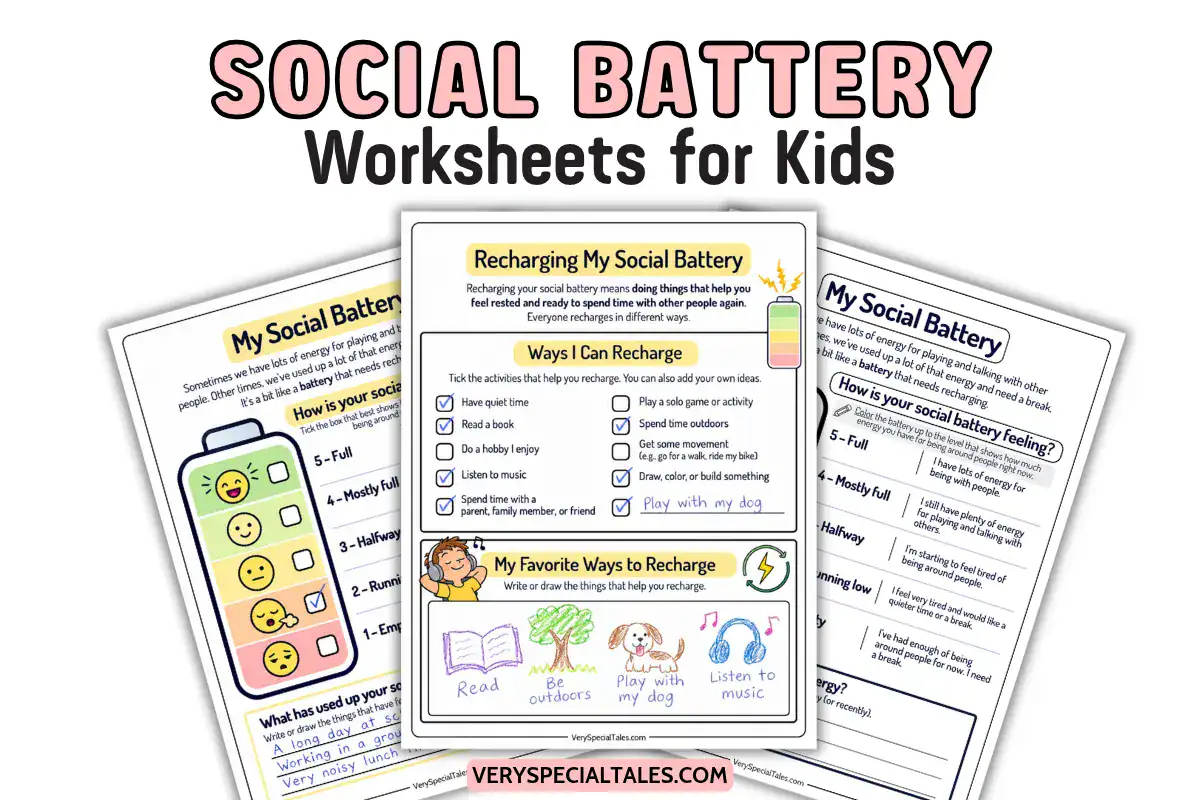
Social Battery for Kids (Worksheets): Learn how to recognize when your child is running low on social energy, what might be draining it, and how to help them recharge. You’ll also find a free worksheet to introduce the concept to kids in a simple, visual way.
Children can come home from school exhausted, become irritable after a birthday party, or suddenly want to be left alone after spending time with friends. Sometimes, they’ve simply had more social interaction than they have the energy for.
The idea of a social battery can help parents understand why this happens and recognize when their child might need a break.
What Is a Social Battery for Kids?
A social battery is a way of describing how much energy we have for being around and interacting with other people. It’s not a formal scientific term, but a useful way to explain why socializing can sometimes leave us feeling tired or overwhelmed.
Think of it like the battery in a phone. Some activities use up energy, while others help us recharge.
For children, social interaction can involve a lot of effort. They may spend their day listening to teachers, working with classmates, navigating friendships, taking turns, following group rules, and responding to other people’s expectations.
Having a low social battery doesn’t necessarily mean a child dislikes being around people. They may enjoy an activity and still feel exhausted afterward.
Working with teens? Explore our Social Battery for Teens post, which includes free worksheets to help teens understand their social energy and create a personalized plan to recharge.
Signs Your Child’s Social Battery Is Running Low
Young children may not recognize when they’re becoming socially exhausted. They might not have the words to explain what they’re feeling, either.
Instead, parents may notice changes in their child’s behavior:
- Becoming irritable or impatient: Small frustrations seem harder to handle than usual.
- Wanting to be alone: They withdraw from family activities or prefer playing by themselves.
- Talking less: They become unusually quiet or don’t want to answer questions.
- Finding social interaction more difficult: They seem less willing to join games, take turns, or cooperate with others.
- Becoming more emotional: They cry more easily or have stronger reactions to everyday situations.
- Appearing tired or overwhelmed: They seem exhausted after school, a playdate, or a busy family gathering.
These behaviors don’t automatically mean their social battery is depleted. Hunger, lack of sleep, sensory overload, stress, and other factors can cause similar reactions.
What matters is noticing patterns. Do these changes happen after particularly busy or socially demanding days? Does your child seem more comfortable after some quiet time or a break from interacting with others?
Observing when these behaviors occur can help you understand what your child might need.
What Drains a Child’s Social Battery?
Different situations use up different amounts of social energy, and what feels exhausting for one child may be enjoyable for another.
A child’s social battery might run low after:
- Busy school days: Spending hours with classmates, participating in group activities, and responding to teachers.
- Large groups: Birthday parties, family celebrations, school assemblies, or crowded playgrounds.
- Meeting new people: Interacting with unfamiliar children or adults.
- Navigating friendships: Sharing, negotiating, resolving disagreements, and managing group dynamics.
- Social expectations: Taking turns, making conversation, following group rules, or participating when they’d rather have a break.
- Back-to-back activities: Going straight from school to sports, clubs, playdates, or other social commitments.
Social Battery vs. Sensory Overload
Sometimes, what looks like social exhaustion may actually be sensory overload, or a combination of the two.
Social exhaustion refers to feeling drained by interacting with other people. Sensory overload happens when sensory input, such as noise, bright lights, movement, or crowded surroundings, becomes too much to manage comfortably.
Consider a child who comes home exhausted after a birthday party.
They may be tired from playing with other children, following group activities, and navigating social interactions. But they may also have found the loud music, shouting, and busy environment overwhelming.
The two experiences can overlap, especially in environments that are both socially and sensory demanding.
You don’t necessarily need to work out whether your child is experiencing social exhaustion, sensory overload, or both. Giving them a break from a busy environment and some time to recover may help, whatever the cause.
How to Help Kids Recharge Their Social Battery
Children don’t always know when they need a break, so parents and teachers can play an important role in helping them manage their social energy.
A few simple adjustments can help children manage their social energy:
1. Allow Time to Unwind After School
After a full day of learning and interacting with others, some children need time to decompress.
They may not want to talk about their day immediately or participate in another activity.
Consider giving them some unstructured time before asking questions, starting homework, or arranging additional activities.
That might mean reading, drawing, playing quietly, or simply relaxing.
2. Find Out What Helps Your Child Recharge
Recharging doesn’t necessarily mean being alone.
Some children enjoy quiet, independent activities, while others feel better spending time with a parent, cuddling with a pet, or playing with a close friend.
Possible ways to recharge include:
- Reading or listening to a story
- Drawing, coloring, or doing crafts
- Playing quietly with favorite toys
- Spending time outdoors
- Listening to music
- Relaxing in a comfortable space
- Spending one-on-one time with a parent
- Playing with a close friend in a familiar setting
Pay attention to which activities leave your child feeling more comfortable and ready to engage again.
3. Build Breaks Into Busy Days
If you know a situation tends to drain your child’s energy, think about opportunities for breaks.
For example, during a long family gathering, your child might benefit from spending some time in a quieter room, going outside for a short walk, or taking a break from group activities.
At school, a teacher might offer opportunities for quiet activities or short breaks between demanding group tasks.
A break doesn’t have to mean leaving the activity altogether. Sometimes a few minutes away from the social demands can make it easier to participate again.
4. Avoid Overscheduling Social Activities
School, extracurricular activities, birthday parties, and playdates can quickly fill a child’s week.
Even when children enjoy these activities, having too many without enough downtime may leave them exhausted.
Consider your child’s energy levels when planning their schedule. Some children can comfortably manage several activities in one day, while others need more time between social commitments.
5. Respect Their Need for Space
A child who wants to spend time alone isn’t necessarily being unfriendly, rude, or antisocial.
They may simply need a break.
If your child doesn’t want to talk immediately after school or needs some time away from a busy family gathering, try to respect that need when it’s safe and practical.
6. Help Them Communicate What They Need
Young children may struggle to explain why they want to leave an activity or stop interacting with others.
You can model simple phrases they can gradually learn to use, such as:
- “I need a break.”
- “Can I have some quiet time?”
- “I want to play by myself for a little while.”
- “Can we do something quieter?”
- “I’m tired of talking right now.”
Children don’t need to understand the entire social battery concept to begin communicating these needs.
Helping Kids Understand Their Social Battery
The battery analogy can be a useful way to introduce the idea of social energy, but we shouldn’t expect young children to recognize when their battery is running low or independently manage it.
For many children, understanding their own emotions and physical sensations is still a developing skill. Recognizing that a particular social situation has used up their energy adds another layer of complexity.
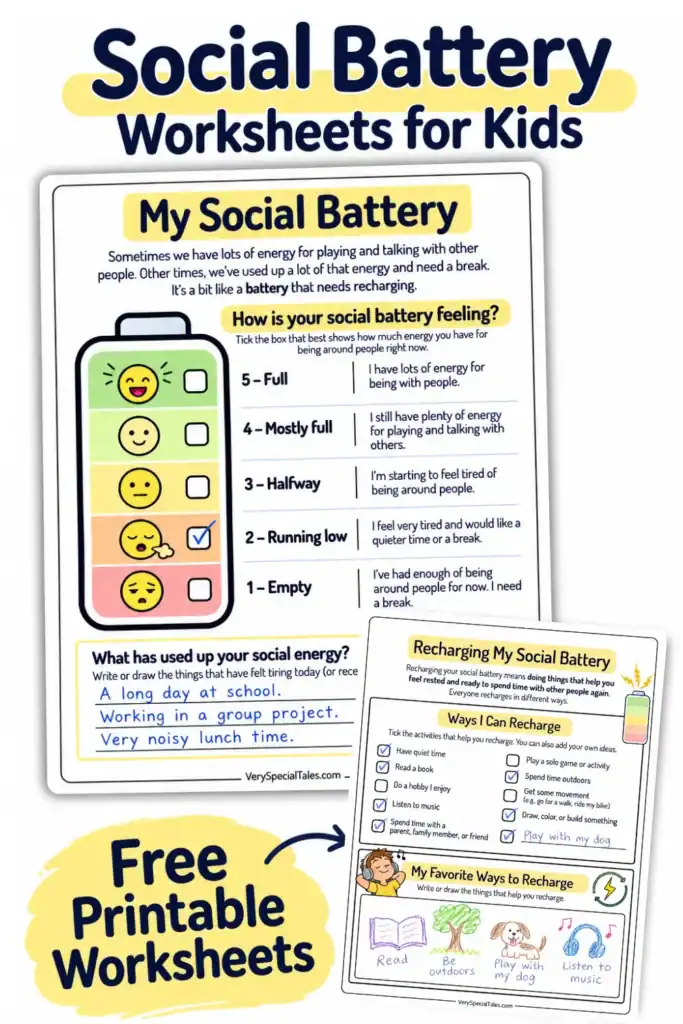
Our free Social Battery Worksheet for Kids introduces the concept with a simple explanation:
“Sometimes we have lots of energy for playing and talking with other people. Other times, we’ve used up a lot of that energy and need a break. It’s a bit like a battery that needs recharging.”
You can explore this idea together when your child seems tired after a busy or socially demanding activity.
For example, you might say:
“You’ve had a busy day at school, and you seem tired now. Do you think your social battery might be running low?”
Give your child space to share how they feel. They may agree, disagree, or have a different explanation.
The two-page worksheet provides a visual way to explore the concept together. Children can:
- Check their social battery level using a five-level battery with simple descriptions and faces.
- Think about what has used up their social energy, with space to write or draw.
- Explore ways to recharge, choosing from familiar activities and adding their own ideas.
- Identify their favorite ways to recharge by writing or drawing what helps them.
Younger children may need more guidance, and that’s okay. You can use the worksheet as a conversation starter rather than expecting them to complete it independently.
Other Social Skills Resources
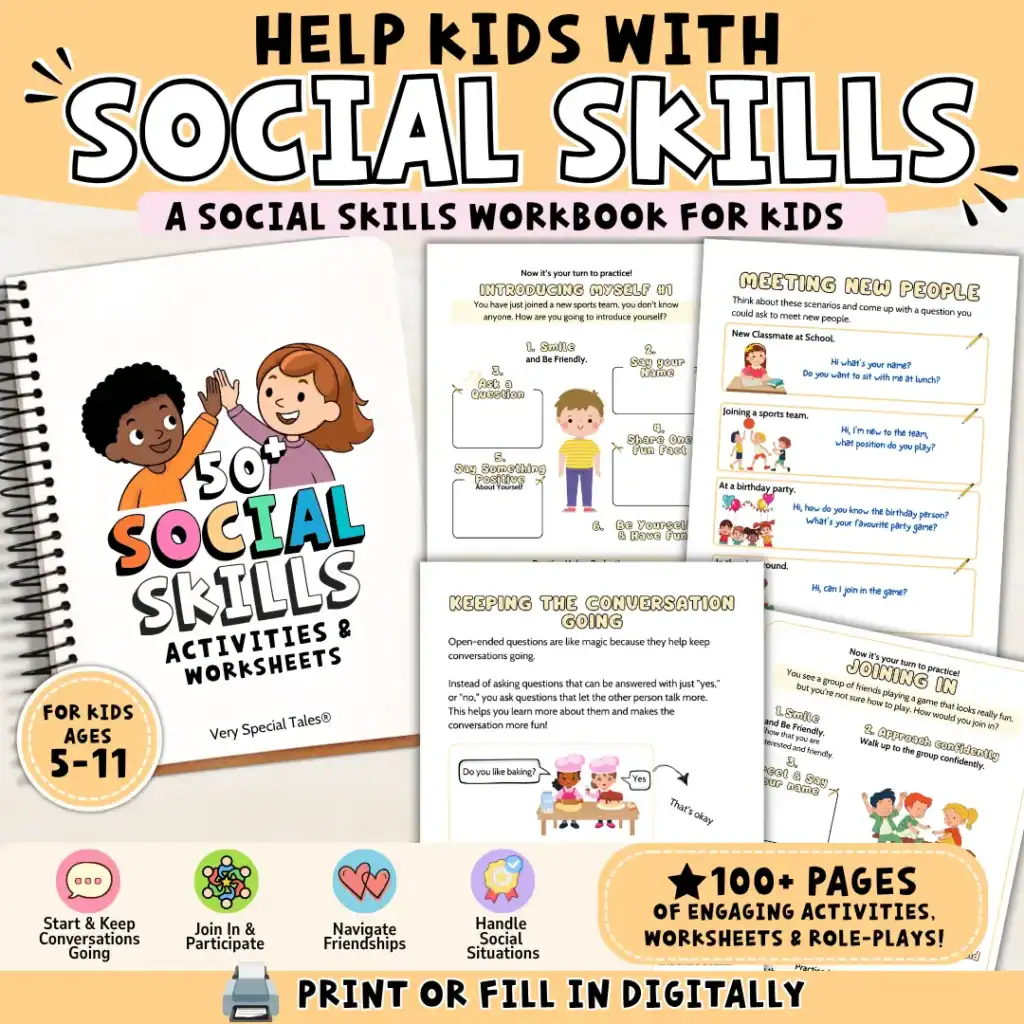
Social Skills Workbook for Kids
Want to keep building these social skills? The Social Skills Workbook for Kids includes practical activities to help children: develop skills for communicating, connecting with others, and navigating everyday social situations.
- Communicate and listen: Express themselves clearly and understand others.
- Understand emotions: Explore how feelings affect social interactions.
- Participate and connect: Join group activities, take turns, and build friendships.
- Speak up: Practice speaking up for themselves and others.
Related Social Skills Articles
- Social Skills Activities for Kids
- 66 Important Social Skills (Checklist included)
- Friendship Activities for Kids
- Personal Space Activities for Kids
- Learning to apologize
- Assertive communication skills for kids
Download Your Free Social Battery Worksheet for Kids
Our free Social Battery Worksheet for Kids includes two activities that children can complete with support from a parent, teacher, or counselor:
Recharging My Social Battery: A checklist of activities that may help children recharge, plus space to write or draw their favorite ways to recharge.
My Social Battery: A five-level battery to help children explore how much social energy they have and what may have used it up. The battery worksheet comes in both color and black-and-white versions.