Mood Charts for Kids: In this post, you will learn to use a mood tracker for kids. You will also be able to download a few mood trackers for kids (including a Zones of Regulation-inspired mood chart)
A mood chart is one of my favorite tools for helping kids recognize and manage their emotions.
Table of Contents
- What Is A Mood Tracker
- Benefits of Using a Mood Tracker with Your Kids
- Tips for Using a Mood Chart
- Real-Life Examples (of how helpful it can be!)
- Other Emotional Tools
- Download your Free Printable Mood Charts for Kids
What Is a Mood Chart (or Mood Tracker) for Kids?
A mood chart (also known as a mood tracker, feelings log, or an emotion chart) is a simple but powerful tool that helps kids identify and track their emotions at regular intervals over time.
A typical daily emotion tracker is structured with a list of days (like Monday through Sunday or the whole month) and a set of key emotions shown with words, colors, faces, or pictograms.
Each day, the child marks the main emotion they felt, or several if their day included different emotional moments.

Kids can fill it out once a day (usually at the end of the day), or more often by breaking it into parts of the day: morning, midday, and afternoon.
Some versions work more like an emotion journal, where kids write or draw something that happened, the emotion they felt, or how that emotion showed up in their body. Others might be as simple as a printable chart that hangs on the fridge or in their bedroom, or even an app they check in with. The key is to choose a format that fits their age, preferences, and stage of development.
Tracking emotions with a mood chart helps families and teachers notice patterns.
It can show what situations or people trigger certain feelings, which times of day are more challenging, or what activities improve a child’s mood.
Whether it’s a tantrum, excitement, or feeling overwhelmed, this tool helps children express big emotions and opens the door to meaningful conversations about what’s happening inside and around them.
It also gives us valuable opportunities to teach practical tools for managing those emotions.
Benefits of Using a Mood Chart with Kids
Some of the top reasons to add an emotions chart to your daily routine include:
- Helping build the skills to control their own emotional regulation (when they are aware of how they feel, it is easier to control any large emotions)
- Helping identify triggering events (noticing that taking the bus to school is a traumatic experience every day will help you work on making it less threatening or consider other modes of transportation)
- Learning basic emotion words
- Learning to identify basic emotions and how they feel in their body
- Developing healthy coping skills (when your kids realize that feeling tired leads to tantrums, then they can recognize when they are tired so they avoid anything that may start a tantrum)
- Helping your child feel that they can express various emotions in different ways (when your child can express their joy, they can learn how to show it in different ways that are appropriate for the situation – for example, if they are joyful during a piano recital, screaming with glee at the top of their lungs is not appropriate)
- Increasing emotional intelligence in younger children (when kids know how they feel, they will be better able to interpret other children’s feelings)
- Developing social skills (knowing how to interpret emotions in themselves as well as others will help them identify which social experiences are the most positive ones for them)
- Creating a positive self-image (the ability to look inward and discover how you are doing will help develop the confidence to walk into different situations.)
As you can read, the reasons for using a mood chart with your child can vary since there are so many benefits.
Mood tracking can help them to identify and positively express feelings. Even with younger kids, the results are surprisingly helpful.
The mood charts mentioned below are a great way to help children with their own emotions.
Of course, you will be able to identify other benefits with your own children once you begin incorporating a mood chart into your day-to-day activities.
Ready to use your mood chart? Keep reading to learn all about it…
How to Use Your Mood Tracker with Kids
Using a mood chart is one of the simplest ways to check in with your kids each day.
Depending on the type of feelings tracker your family uses, there are plenty of chances to weave it into your daily routine.
For young children, using a simple chart with different colors to identify different emotions that they can point to is an easy way to start.
- If their vocabulary is still developing, simpler tools like feelings playdough mats may be a better fit.
- Reading books is a great way to build the emotional vocabulary kids need to use a mood chart effectively.
- Display a feelings chart for a quick feelings lesson before breakfast.
- An emotion wheel is also a great tool to help young kids point out which emotions they are feeling.
With older kids, it’s common to experience a mix of emotions at once, so a more detailed emotions chart might work best. Here are a few ideas they might find helpful:
- Hanging an emotions vocabulary poster in their room or bathroom
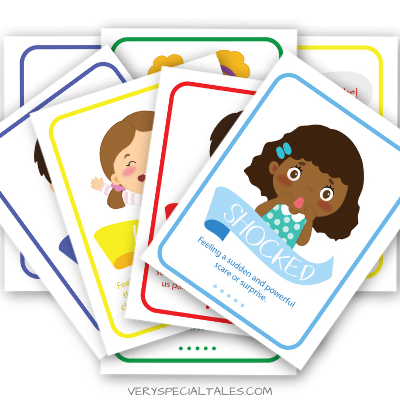
- Playing with these emotions flashcards that are perfect for helping kids learn how to describe common emotions
- Going around the dinner table and having everyone share what emotions they encountered that day and why – keep it written in a family diary that can be used every night.
General Tips When Using Mood Tracker with Kids
There are several ways to ensure success when you start implementing a mood chart.
- Consistency is key! Make it a habit to mention it at least once every single day. The more you can work emotions into your discussions, the easier it will be in the long run.
- Pick a time to use it each day.
After school, before bed, or first thing in the morning all work well—just make it part of a predictable routine.
- Pick a time to use it each day.
- Be honest and share your own feelings. It’s hard to expect openness from our children if we aren’t modeling it ourselves.
- Model how to use it yourself.
Kids learn by example. Use the chart and speak aloud about your feelings:
“I’m feeling a bit frustrated today because it was a really long day.”
- Model how to use it yourself.
- Create a safe space for the expression of feelings in your everyday routine.
Allowing a kid to admit that they are frustrated, excited, or overwhelmed will help develop emotional maturity in the end.- Ask open-ended questions to help kids reflect.
- What happened before you felt that way?
- Where do you feel that emotion in your body?
- What could you do next time if this happens again?
- Avoid judging or correcting their responses.
All emotions are valid. If something surprises you, try curiosity instead of correction:
“Can you tell me more about why you feel that way?”
- Ask open-ended questions to help kids reflect.
- Choose the right format based on your child’s age and development level.
- Ages 3–6: Use visual tools like colors, faces, or simple drawings.
- Ages 6–9: Introduce basic feeling words like “happy,” “sad,” “angry,” or “nervous.”
- Ages 9+: Try emotion thermometers, journaling, or longer lists of emotion words.
- Place the chart somewhere visible and easy to access.
- At home, try the fridge, their bedroom, or a calm area.
- In a classroom, place it near the calendar, in the group meeting area, or in a quiet corner.
- Look for patterns and use them to start deeper conversations.
- If a child marks “nervous” every morning or “angry” after lunch, explore why together.
“I’ve noticed you’ve been choosing ‘sad’ a lot after school. What do you think is making you feel that way?”
- If a child marks “nervous” every morning or “angry” after lunch, explore why together.
- Introduce regulation strategies based on the patterns you notice.
- For anger: try deep breaths, movement, or quiet time.
- If your child struggles with anger, focusing on just that emotion may be the best place to start. Here is the link to a printable feelings chart: an Anger Thermometer can be the perfect goal sheet for managing anger.
- For anxiety: create a calming routine, imagine a safe place, offer comfort or predictable structure.
- For anger: try deep breaths, movement, or quiet time.
- Celebrate the act of naming emotions (Not just the “positive” ones!)
Say things like:
“I love that you’re learning to name your feelings.”
“Thanks for sharing how you feel. That’s really helpful.”
I know you can’t wait to get started, but let me share with you some of our wins with my favorite printable mood chart (download for free, at the end of the post!)
Real-Life Examples Using a Mood Tracker
Mood trackers have become one of my favorite tools for supporting emotional development. I’ve been using the same ones you’ll find in the download with our son at home.
He is the one who reminds me he wants to complete them!
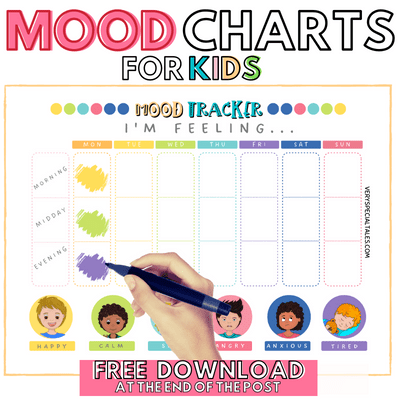
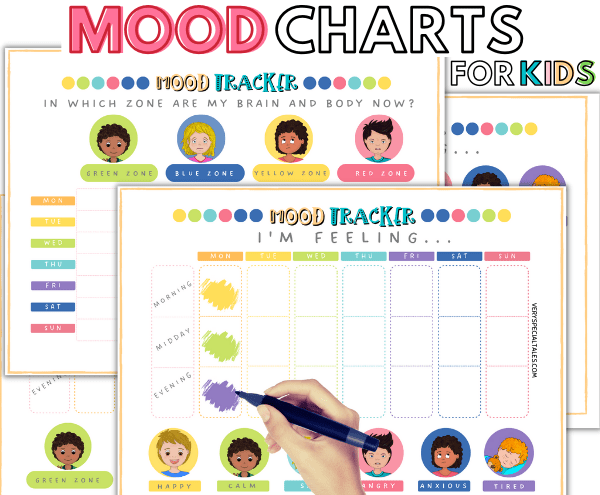
The first chart is a tracker version with six emotions, each shown through illustrations of children expressing different feelings.
The second tracker is inspired by the four Zones of Regulation. Many schools follow this social-emotional learning curriculum, so I thought it would be helpful to add it. Our son works with the Zones at school, but he prefers the feelings tracker.
I’ll share with you a couple of situations we encountered because they illustrate why I’ve fallen in love with this tool.
Example 1: Using a Mood Tracker to Start Conversations About the Day
When I ask my son how the day has gone for him, his usual answer is, “I don’t want to talk about it!”.
And that’s the end of the conversation. He is just not interested in talking about it. There are plenty of other topics that capture his attention more.
But, since we started using the mood tracker, things have changed dramatically.
Now, he wants to share what his day has been like, whether he had to deal with difficult emotions and his different moods. He shares his different feelings because he wants me to understand his choice of colors for the mood tracker!
“Today, the morning has been good, and I felt happy. But then I got really mad because I couldn’t use my tablet because it ran out of battery. The evening has been great because we did a video call with May, and then I had my pasta for dinner.”
Example 2: Using a Daily Mood Tracker to Help Kids Reflect on Their Emotions
Our mood trackers have also been great tools for reflecting on his intense emotions.
If you look at the picture below, Tuesday evening looks extremely messy.

That’s because the evening was full of mixed feelings, and we were able to visualize my child’s moods with the mood chart.
The evening started mega happy (another video call to our favorite person). But then, while he was on the call, he started getting frustrated. He couldn’t find the right words to express himself. The more anxious he got, the more difficulty he had expressing himself. Then, at some point in time, the anxious feelings became angry feelings.
But then, something magic happened.
Our son was able to express the need to finish the call because he was not feeling okay anymore. We did a few breathing exercises, and he started displaying fewer anxiety symptoms.
We congratulated him for his amazing self-regulation:
“You’ve done an amazing job using your words to express what you were feeling and what you needed. And we are so proud of you because you managed your big emotions and found a way to calm down.”
Although I helped with the breathing activities, he had already managed to take some control over his emotions.
We went back to our mood track to reflect on the different emotions he had experienced.
We added a bit of yellow (happy), mixed blue and red for anxious and angry, and added green (calm) at the end.
I just can’t even start to tell you how super proud we were. Emotional regulation is very difficult for our neurodivergent boy, so this was a huge win.
More Resources for Exploring Emotions

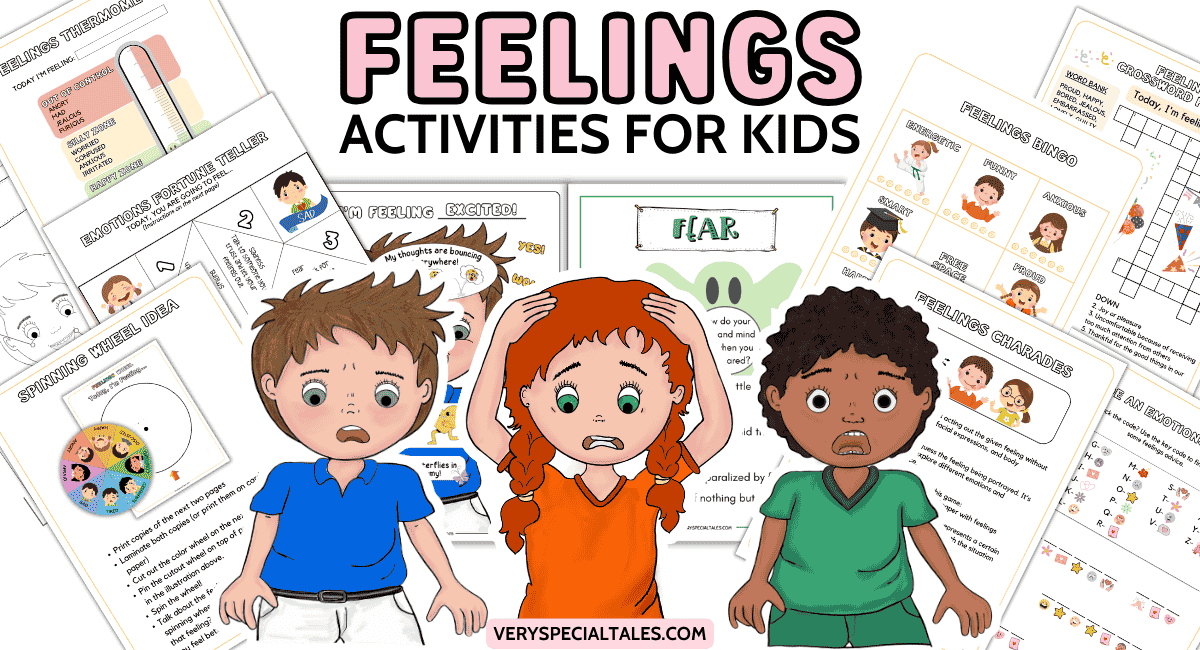
Emotions Bundle
A set of easy-to-use PDF materials to help children understand and talk about their emotions. Perfect for home, school, or therapy.
It includes:
- Three Feelings and Emotions Workbooks:
- Basic Emotions
- Exploring 15 Emotions and Moods
- Feelings Expeditions (fun games and activities
- Emotion Flashcards (26)
- Emotions Playdough Mats

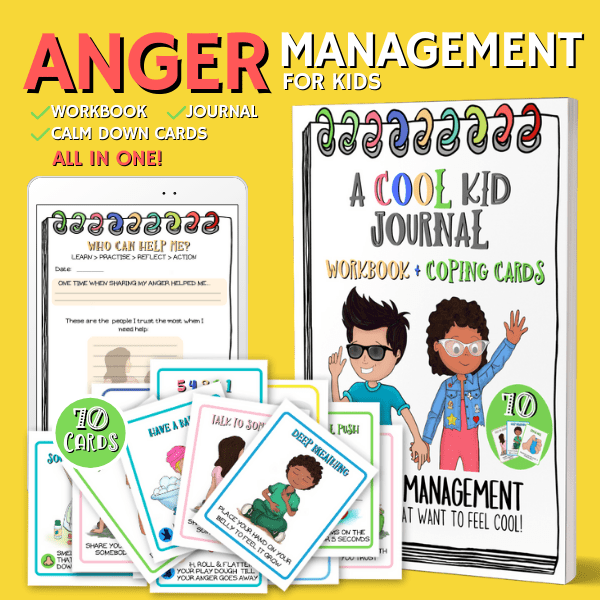
Anger Management Workbook for Kids
Cool Kid Journal is a comprehensive resource to help kids build healthy coping skills for managing anger.
This printable workbook teaches practical strategies to recognize anger triggers, express feelings in safe ways, and calm down effectively. The journal includes engaging activities, reflection pages, and 70 calm-down cards to support emotional regulation and self-awareness.

No Worries Journal
Activity workbook to help children with anxiety and worries.
This workbook includes five engaging stories about kids facing different worries, each packed with practical tools, worksheets, and activities to help children learn how to manage anxiety in a fun and hands-on way.
Other fun feelings activities:
Download your Free Printable Mood Charts for Kids: Daily, Weekly, and Monthly Mood Trackers

I have created a few different options for our mood charts:
- Morning / Midday / Evening
The day is long. If your child focuses only on the negatives, it will distort the image that they see reflected in their chart.
So, I’ve created three “stops” to reflect on how our emotions have played out throughout the day.
- Weekly Mood Tracker
On the following day, we would look at the previous day and assess our overall feelings about the day.
That allowed us to discuss and reflect on how specific events may not have tainted how the day was. This would have been difficult without the detailed tracker of the previous day (morning/ midday/evening.) - Monthly Tracker
I’ve also created a fun monthly mood tracker, in case you’d like to take a step back and look at the whole month.
I’ve kept the same format for both the emotions tracker and the Zones of Regulation–inspired mood tracker. The monthly mood chart is only available in the emotions version.
Thanks for pinning this helpful post: