Feelings Thermometers for Kids (Free Printable Included): Helping children recognize and express their emotions can sometimes be challenging, especially for younger kids who may struggle to explain how they feel.
Feelings thermometers are simple visual tools that can support emotional check-ins, conversations about feelings, and discussions about what might help. In this post, you’ll find ideas on how to use them with kids, along with a free printable PDF that includes two different feelings thermometer activities.
What Is a Feelings Thermometer?
A feelings thermometer is a visual tool that helps children recognize and talk about their emotions.
It uses the familiar image of a thermometer to represent feelings in a simple and engaging way. Depending on the design, a feelings thermometer can either show how strong a feeling is or present a range of different emotions for children to choose from.
Feelings thermometers often include colors, facial expressions, and emotion words, making it easier for kids to identify how they feel and communicate it to others.
They can be used at home, in the classroom, or in therapy settings to support emotional awareness and everyday check-ins.
While this feelings thermometer focuses on a range of everyday emotions, you may sometimes want to focus more specifically on anger and frustration.
If that’s the case, you can explore our anger thermometer resource, where we look more closely at how anger builds and how to manage it.
How to Use a Feelings Thermometer for Kids
A feelings thermometer is a flexible tool, and there are several ways children can use it depending on the design.
Across all versions, it offers simple but important opportunities for kids to:
- Identify and label their feelings
- Talk about how they feel
- Reflect on what might help them
- Build emotional awareness over time
You can use it as a quick daily check-in, after a difficult moment, or as part of a classroom or home routine.
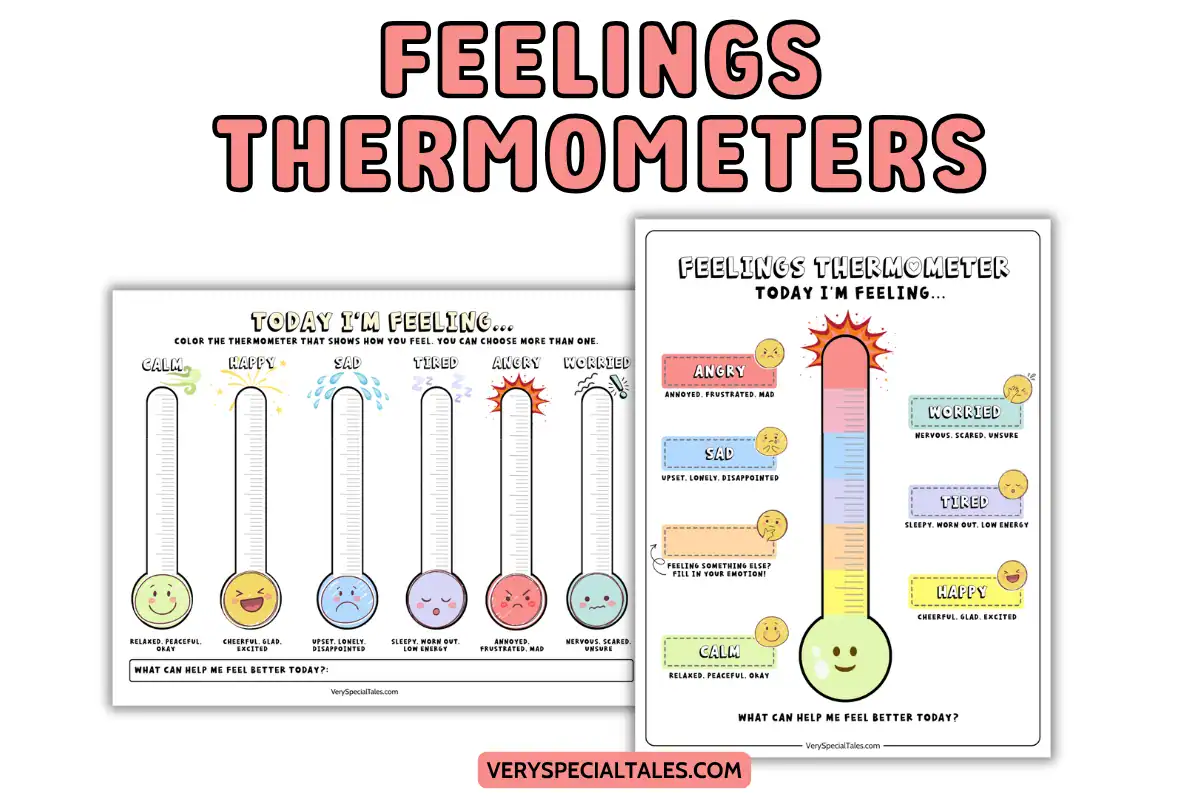
In the free download below, we’ve included two different feelings thermometers, each with a slightly different approach.
1. Feelings Thermometers (6 Emotions Included)

In this version, each thermometer represents a different emotion.
Children can:
- Color the thermometer to show how strongly they feel that emotion
- Choose more than one feeling if they are experiencing mixed emotions (for example, tired and sad, or calm and happy)
- Focus on one specific feeling and explore it in more detail
This format works especially well to:
- Talk about how feelings can be stronger or milder
- Compare different emotions
- Introduce related feeling words (using the synonyms provided)
You can also encourage children to think about:
- When they usually feel this way
- What their body feels like
- What might help when the feeling becomes stronger
2. Single Feelings Thermometer (All Emotions in One Scale)

This version presents several emotions on a single thermometer.
It’s designed as a simple “how am I feeling right now?” check-in.
Children can:
- Look at the thermometer and choose the feeling that best matches how they feel
- Use it as a quick way to identify their current emotional state
- Notice how their feelings may change throughout the day
This version also includes a “something else” option, where children can:
- Write their own feeling if it’s not listed
- Use a word that feels more accurate or meaningful to them
This adds flexibility and helps children expand their emotional vocabulary over time.
When to Use a Feelings Thermometer
A feelings thermometer can be used in many everyday situations to help children check in with their emotions.
- Daily check-ins
Use it as part of a morning or afternoon routine to help kids notice how they feel. - After a difficult moment
It can help children pause, identify their feelings, and start talking about what happened. - Before problem-solving
Naming the feeling first can make it easier to think about what to do next. - As part of classroom routines
It works well during circle time, transitions, or as a calm-down corner tool.
Other Tools to Help Kids Understand and Express Their Feelings
A feelings thermometer is just one way to help children recognize and talk about their emotions.
If you’re looking to support your child or students in building emotional awareness, these tools can also be very helpful:
- Anger Thermometers
A more focused tool to explore how anger builds and what to do at each stage. - Emotion Charts (Feelings Charts)
Visual charts that show a wide range of emotions to help kids identify and name how they feel, with space to add coping strategies. - Mood Trackers for Kids
Simple tools that help children notice patterns in their feelings over time. - Emotion Wheels
Circular charts that group related emotions together, helping kids expand their emotional vocabulary. - Thoughts–Feelings–Behaviors (CBT Triangle)
A simple framework that helps kids understand how their thoughts, feelings, and actions are connected, and what they can do to respond in helpful ways.
Feelings Thermometer for Kids (Free Printable PDF)
This free feelings thermometer printable is a simple and engaging tool to help children recognize, express, and talk about their emotions.
In this download, you’ll find two different feelings thermometers, each designed for a slightly different use:
- Multiple feelings thermometers (6 emotions)
Kids can color each thermometer to show how strongly they feel different emotions. They can also choose more than one feeling and explore related emotion words. - Single feelings thermometer (all emotions in one scale)
A quick check-in tool to help children identify how they feel in the moment. It also includes a space to write their own feeling if it’s not listed.
The printable also includes simple instructions to help you introduce the activity and guide children as they learn to use it.


This material is super important! Thanks!!